
The training plan is a document system detailed description, objectives, content, method, schedule, and resources necessary to enhance the knowledge, skills and attitude of the staff, to help businesses develop human resources in a way that the orientation and efficiency. Construction planning, employee training effectiveness should include the defined training needs, set specific goals, choosing the right program, resource allocation, and evaluate the results.
However, in fact, many organizations, especially the small and medium enterprises, still stuck in the building, deployment planning, personnel training: from determining actual needs, selection of training methods appropriate to the measurement results to improve the program. If the plan is not set up properly, business waste cost, time can also miss opportunities to develop human capacity.
Therefore, understanding the role, structure as well as process building training programs not only help the learning effective but also support business development training set, transparent and tied to business goals. In this article Lac Viet will provide more detail in the template plan staff training, table structure plan the building process for effective business.
1. The training plan is what?
The training plan is a document-oriented the whole operation capacity development for employees in a specific time period (month, quarter, or year). It clearly defines: training objectives, content, methods of implementation, resources, budget, and how to evaluate the effectiveness.
In other words, the plan, like the overall design for the learning process internal. Instead of training, development each program is defined “teaching what – for who – how – how much does it cost – outcome expectations out why”. This helps businesses deploy training system, synchronized with strategic workforce development and easily standardize the sample programs, staff training, according to each group of objects.
The role of planning for business:
- Link training with business objectives: Ensure all programs and service learning directly to the strategic objectives such as increasing productivity, standardize processes and improve the quality of service.
- Optimal cost and resources: waste Reduction due to learning, sperm, wrong methods or wrong objects; at the same time support budget allocation and selection form the proper training.
- Improve the quality of personnel, reducing operator error: Standardized skills for the position of commissioning, help reduce errors and increase the stability in daily activities.
- Create transparency and motivation for the employees: learners understand the need to training what and why, from which more active and feel is a serious investment from the business.
- Increase effective coordination between HR and other departments: Support exchange needs, arrange a time and evaluate the results based on the clear data, raise professionalism in human resource management.
2. The kind of training plan, popular in the business
In the enterprise, the deployment of training can't be done in a random way. Each type of plan has a purpose, object, and method individually. Understanding each type of help HR as well as managers to easily choose suitable plan, optimize resources to ensure staff is properly developed demand.

2.1. Training plan periodically (year/quarter/month)
This is the kind of training plan internal most popular, often being set up every year, by quarter or by month. Content focus on:
- Basic skills – competency standards required of each position.
- The program capacity development according to the strategy business.
- Training to update knowledge, processes or new products.
Practical benefits:
- Avoid wasted by training a duplicate or not in sync.
- Improve the quality of commissioning – standardized staff capacity.
- Building a culture of continuous learning in the enterprise.
For example, The sales department can be skills training, customer care, and persuasion skills or knowledge, new products quarterly. The goal is to ensure all staff always updates the knowledge, capacity, sync, and ready to perform the job efficiently.
2.2. Training plan for new employees (Onboarding Training Plan)
The main goal of this type of this plan is to help new employees integrate quickly with culture, processes, tools, work and policies of the business.
Practical benefits:
- Shorten the time of inclusion, reduce operating errors.
- Increase the ability to retain new employees.
- Help employees quickly achieve work productivity expectations.
For example: the first Week: introduction, company culture, policies, training, internal software, guided workflow basic;
Week Monday – three: focus on professional skills required for the job position.
2.3. Training plan according to the project or demand unscheduled
Type this plan is set up when business need training immediately according to the actual demand
- Change operating procedures.
- Technology deployment or new software.
- Prepare personnel for special projects.
Practical benefits:
- Enterprise guarantees timely response to change.
- Enhance project performance, reduce operational risk.
For example, When deploying software, project management, new room, IT and related personnel should be trained to help work without interruption, as well as staff quickly master new skills.
2.4. Plan staff training according to the schedule career
This is a long-term plan to develop human resource capacity according to the route profession, prepare for the position of successor or upgrade professional skills and management.
Practical benefits:
- Development team, internal, reducing the cost of hiring outside.
- Motivational development for staff, increase retention, hr talent.
- Ensure resources are ready for the important position.
For example: mid-level employee want to become management departments will be trained each stage: skill, project management, team leader, data analysis, and performance management.
2.5. Plan compliance training
Type this plan focuses on mandatory training prescribed by legislation, industry standards or the rules of business, including:
- Occupational safety.
- Information security – data.
- Corporate culture – internal regulations.
Practical benefits:
- Reduce legal risks – compliance with standards in the industry.
- Construction corporate culture of transparency and safety.
For example: production division Staff are trained on occupational safety; IT Staff guidance on data privacy, GDPR.
Choosing the type of plan the proper training to help organizations and businesses are to find out information about this area easily deploy programs tailored to each hr team. Besides, the application of the template plan staff training available can also help standardize content, save time and cost, thereby ensuring the training objectives are effectively implemented.”
3. The structure of 1 table plans, internal training professional
A table plan complete training is not only list of course or class schedules, but also as strategic tool to help businesses operate effective training, cost control, as well as measuring actual results. The planning details that ensure training activities associated with business objectives, tailored to each hr team and meet the needs for capacity development of the business.
| Structural elements | Main content need to determine | The strategic implications |
| Training objectives | Skills/Knowledge needed to achieve the results expected (according to KPI). | Pillars orientation, link cost, efforts with business objectives, is the base measure ROI. |
| Object training | Position, rank, number, characteristics, current, capacity of students. | Ensure the right people, the right to demand, increase the ability to apply knowledge into practice. |
| Training content | Details the module, knowledge, and skills needed to develop, logical sequence. | Help instructors prepare, avoid courses “rampant”, increase the actual value. |
| Training methods | Offline, Online, Blended Learning, Coaching/Mentoring, Workshop. | Increase the efficiency of learning, memorization, application, in accordance with the budget and specific work. |
| Training budget | Cost of instructors, materials, facilities, software, support costs other. | Control costs, optimize resources, compare the ROI between the schemes. |
| Time – Schedule deployment | The total course duration, course schedules specific (day, week, month), the milestone. | Ensure employees work arrangements, maintaining continuity as well as the training progress. |
| Person in charge | HR/L&D, Head of department, Faculty internal/outsourced is responsible for the implementation and monitoring. | Decentralization clearly, progress tracking, handling problems arising at the same time maintaining quality. |
| KPI – assessment Methods | Rating input/output, satisfaction survey, tracking app on KPI work, calculate ROI. | Prove the value (ROI) with leader, is the basis to improve the content and methods continuously. |
In summary, a table of the professional plan not only lists the course or duration, but also as tools in strategic management, help businesses identify the right audience and training needs, choose content as well as the methods suitable to control costs – the time, the measurement results to continuous improvement; at the same time, apply the template staff training available that help the organizations and enterprises deploy quickly, standardizing the process to achieve the realistic effect.
4. Download free template plan staff training standard
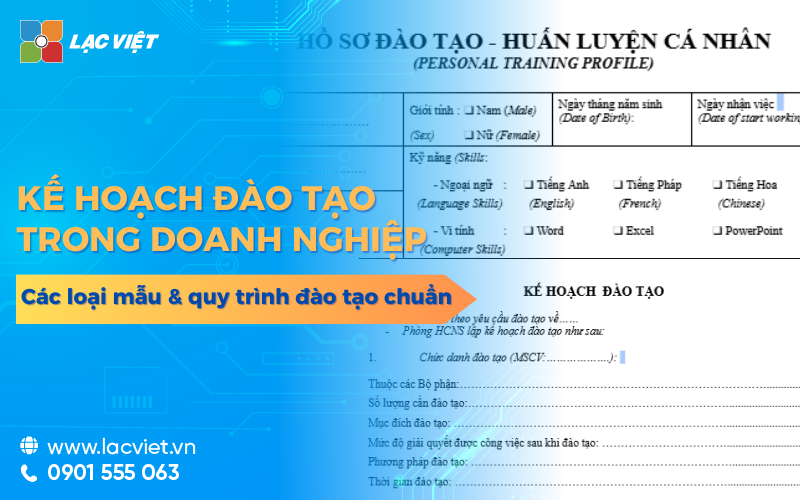
To help HR departments to easily build and deploy the program capacity building for staff, Vietnam has general set plan template staff training standards according to different criteria (title, ISO, by year). Parts HR training can use download now:
Sample 1: Sample training plan
This is the basic structure and the most general. This template is used to plan for any training program, such as training, soft skills, rules, company or new product introduction. It focuses on the core elements such as content, time, locations, person in charge to help HR planning quickly.
Sample 2: Sample plan under the titles
This form specialized training based on the requirements of each position specific job (for example, plans for Sales Staff, Technical). It helps enterprises standardize knowledge – skills for employees in each level, ensuring every employee has sufficient capacity to perform his role.
Sample 3: Sample plan according to ISO
The main purpose of this template is to set up the training program to comply with the standards of international quality such as ISO 9001. This form usually requires documented in great detail about the objective quality, proven training and performance evaluation after training, in accordance with the applicable company management system, ISO.
Sample 4: Sample training plan training
This template focuses on the program of practical training in place (On-the-job training – OJT), or courses, skills-intensive. It conforms to the industry requires skills, practice high (such as production, engineering), help to record in detail the process of training – evaluate the actual progress of the employees.
Sample 5: Sample training company by year
This template provides the overall look as well as strategies on the training program scheduled for implementation in the financial year. It is important tool that helps HR/senior Management to allocate the budget and resources between the closely associated training objectives with common business goals of the company in the long term.
Model 6: Model BMDT-05B training under the titles
Similar to Model 2, this template is the version with the coding (BMDT-05B), which is used for specialized training based on the requirements of each position specific job (for example, plans for sales staff, technical). It helps enterprises standardize knowledge – skills for employees in each level, ensuring every employee has sufficient capacity to perform his role.
Model 7: Model BMDT-05A plan training year
Similar to Model 4, this template is the version with the coding (BMDT-05A), focus on the program of practical training in place (OJT) or courses skill intensive. It conforms to the industry requires skills, practice high (such as production, engineering), help to record in detail the process of training as well as evaluate the actual progress of the employees.
5. The construction process plan effective training
A process standard training to ensure businesses do not implement training duplicated or wasted, at the same time help employees learn effectively and apply knowledge on the job. Below is detail step by step:

Step 1: Identify training needs
Determine the needs are the core steps, because if you don't know employees need what enterprise will cost effort for the course does not bring value. This step will help the business avoid wasting costs – the time for training is not required, ensure focus resources on those skills really effective.
How to perform:
- Collect information from the following departments: HR coordination with the chief of department, line managers to recognise the skills, knowledge or abilities are lacking. For example, the business may need advanced consulting skills customer or skills to use CRM. Production department need to update knowledge about occupational safety.
- Assess capacity gaps: compare current capability of the staff with standard capacity requirements for the position. This is the basis to classify the level of priority.
- Classification needs by level of importance:
- Required: related to compliance with laws, occupational safety or core processes.
- Important: to raise the professional competence, increased operating efficiency.
- Additional: developed soft skills, improve capacity for team work, skills of goods.
For example, If company development software project management, new staff, IT and project management need to be trained (mandatory). In the meantime, presentation skills team can be trained after (adjuvant).
Step 2: goal setting training
Training objectives identify employees need to achieve what after the course, at the same time linked to strategy as well as KPI of the business. Clear objectives help to assess the training effect, increasing the commitment of employees form the basis to measure ROI (Return on Investment – cost-effective compared with the results).
How to perform:
- Use model SMART:
- Specific (Specific): target clear, not vague.
- Measurable (measurable): is there any way evaluate the results.
- Achievable (feasible): suitable capacity – time employee.
- Relevant (appropriate): mounted with business strategy.
- Time-bound (Time limit): limit to finish.
- Combined with KPI capacity of departments.
For example: “In 3 months, 80% of the sales staff reached minimum 85% in the test consulting skills, new products and apply proficiency in CRM in their daily work”.
Step 3: building content – training methods
Content – method is the central part of the plan, decided to employees learned what as well as how they apply knowledge on the job. Standard methods will help academic staff flexible, easy to apply to jobs, reduce operating costs, increase scalability training for multiple employees at the same time.
How to perform: building programs according to the module – Split content into sections receptive and practice.
For example: training course sales skills, including the module: product knowledge, consulting skills, persuasion skills, handling objections, client and practice situations. Select the method appropriate training:
- Offline: live classes, interact directly with trainers.
- Online/e-learning: learning through digital platforms, videos, quiz.
- Blended Learning: combining online/offline, optimal cost-effective.
- Coaching/Mentoring: a guide 1-1 or small group.
- Workshop: practice in real-life situations, increase the ability to apply knowledge.
Step 4: planning deployment details
Detailed scheduling helps ensure training takes place on schedule, departmental coordination, staff is not overloaded work at the same time manage to track progress. The sample training plans typically have detailed schedule to business, easy to apply.
- Construction plan table details: includes study time, schedule, deploy, trainers, platform and material.
- Budget – resources: the cost of instructors, materials, facilities, tool number.
- Class schedule: sort by week, month or quarter, in balance with the ordinary working of the employees.
Illustrative examples: soft skills training lasted 3 sessions, each session 2 hours, held on 3 and 5 every week of the month, faculty internal combined with e-learning platform for employees to review their knowledge.
Step 5: implementation plan staff training
- Notice – prepared staff: send goals, school calendar, documents and instructions before the course.
- Perform training: in the form selected (offline, online, blended).
- Track commitment to learning: point list, complete assignments, participate in discussions.
Actual value: Help employees recognize the importance of training, increase the level of active participation help businesses achieve efficiency higher reality.
Step 6: evaluate – measure training effectiveness
The evaluation of measurement to help businesses know the true effect of the course, from which improve the content, method and ROI assessment.
- Rated output – feedback: measuring knowledge, skills, as well as the ability to apply to jobs.
- Model Kirkpatrick 4 levels:
- Reaction (feedback): the level of satisfaction of students.
- Learning (Learning): the knowledge, skills learned.
- Behavior (behavior): the ability to apply to jobs.
- Results (results): impact on business performance.
- Measure tool: test, survey, assess the actual capacity.
Step 7: adjust – improvement
The ability to adjust and continuous improvement will help the enterprise maintain competitiveness, the employee is constant learning and good experience to help reduce the rate of the holiday at the same time increase operational efficiency.
- Data analysis – feedback: from students, management, HR to adjust the content, methods, materials and time.
- Update cycle training: according to the actual needs as well as strategy development.
- Technology integration: use platform LMS (Learning Management System) helps to track progress, report, KPI, and to support continuous improvement.
In summary, the process 7 steps in this help build the training program, internal items, standardized from the identification of needs, goal-setting, design, content, implementation, evaluation to continuous improvement. When applicable, the business will save on time, budget control, quality improvement team at the same time have the database to optimize the template staff training for the next cycle.
6. Note what when building plan staff training?
When construction plans, training personnel, businesses should note the following points to the training program really brings efficiency to avoid waste of costs and resources.
- Fastened plan with business strategy: training materials should be derived from strategy business development. Employees learn the correct capacity needed words that directly contribute to achieving business goals.
- Retrieve the actual data from the KPI operate to determine needs: KPI Data helps to determine the exact capacity was lacking. Focus resources on the right audience, avoid training rampant, improve efficiency ROI training.
- Preferred method of flexibility training: Staff learning active, fit paced work, increasing the ability to apply knowledge.
- Elearning: learning anytime, anywhere, on digital platforms.
- Micro-learning: the module short, easy to absorb, apply now.
- Blended learning: combining offline/online, optimum cost – time.
- Standardized set of competencies (Competency Framework): building competency standards for each location to determine the exact skills needed training. Avoid training in duplicate, ensure capacity development in sync and measurement results are accurate.
- There are mechanisms post-training evaluation: Use pattern Kirkpatrick 4 levels, Business reviews are effective investment, as well as continuous improvement.
- Feedback (Reaction)
- Knowledge – skills (Learning)
- Application on the job (Behavior)
- Business results (Results)
- Use digital tools to automate management: the platform number support: tracking progress, managing class schedules, report results and competency assessment. Reduce the volume management craft, increase transparency, standardized training data.
7. The optimal solution management training for business system training Vietnam Elearning
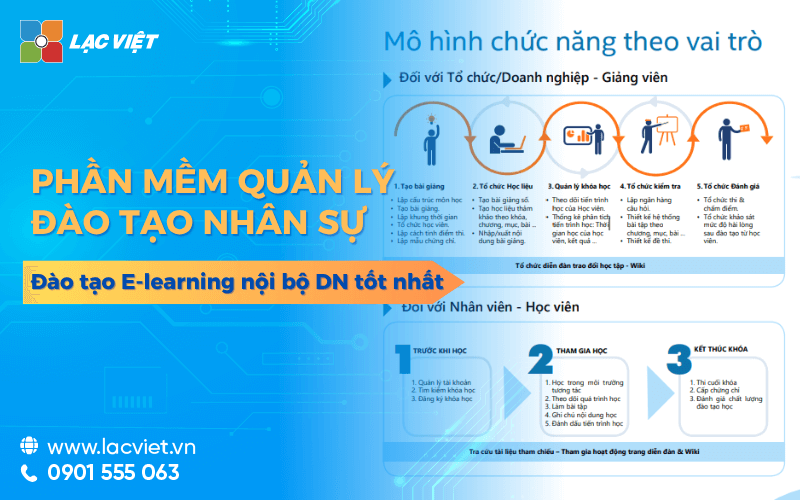
In the context of conversion of Vietnam E-learning provides comprehensive solutions to help construction business plan template internal training professional measuring performance and optimizing costs.
- Automation management plan – academic calendar: includes allocate courses by department, location, team personnel, at the same time send a notification reminder automatic, save time, reduce errors and ensure deployment progress.
- Standardized assessment process capacity – allocation courses: gap analysis competency (Competency Gap) to suggest appropriate courses. Ensure employees learn the right skills needed, raise the training effect.
- Track study progress in real time: Dashboard intuitive for HR and management updates on progress, test results – evaluation capacity. Timely detection staff need support, adjustable flexible plan.
- Stock materials of rich: includes videos, documents, quiz and exercises situations, support diversity training from professional skills, soft skills, to comply with the law, help extend learning ability, reduced cost, as well as learn anytime, anywhere.
- Construction route capacity according to work location: Route learning standardized from onboarding to enhance professional competence and management. Optimal internal resources, reducing the cost of hiring outside capacity team.
- Integrated reporting KPI – reviews training effectiveness: According to the model Kirkpatrick 4 levels, directly connected with the KPI work as well as the corporate strategy, to help measure the exact ROI at the same time a decision to invest a reasonable training.
- Business suits every scale: From SMES to corporations, LV elearning standardized training procedures, easy to expand according to demand. Solution flexible, rapidly deployed with great efficiency.
LAC VIET E-LEARNING – EMPLOYEE TRAINING SOLUTIONS FOR MEASURING EFFECTIVENESS
Lac Viet E-learning is the trusted choice of many large corporations such as FrieslandCampina, PV GAS, Shinhan Bank... with more than 100,000 users across the system.
Lac Viet E-Learning is not just a training system online, which is the platform that helps businesses build human capacity in a sustainable way. The solution is designed to solve the fulness of the problem: training – measurement – develop – retain talent in the work environment is great.
- Difference of Lac Viet E-Learning lies in the ability to combine flexibility between technology, learning experience and management training. Businesses can deploy according to the SaaS model or on-premise, easy to integrate with existing systems
- In compliance with the international standards such as SCORM, OpenBadges, ensuring standardized and scalable long term.
- Don't stop at the “bringing material up system,” Lac Viet E-Learning create learning environments multimodal: online class, learning materials, multimedia, forum for exchange of knowledge, exam – assessment – certificate automatically.
- The entire learning process of the employees are tracking, analysis, reporting in real time, to help businesses accurately assess the effectiveness of training and the level of capacity development.
- Modern interface, high security, automation, deep, ability to analyze training data to help businesses optimize the cost of training, improve work productivity, increase employee engagement.
Ready to elevate effective internal training in your business?  Contact us Lac Viet today for advice model implementing E-Learning in accordance with the scale, industry and development goals of the business.
With version Cloud, Lac Viet E-learning can deploy fast in 7 daysno need to invest in infrastructure, high security and are willing to expand to tens of thousands of users.
For businesses that want to optimize process training, hr, LV elearning is the foundation of a comprehensive construction plan template internal training standards, monitor progress, evaluate the effectiveness and capacity enhancement team. Businesses can learn more as well as experience solutions at: https://elearning.lacviet.vn/
The training plan is the tool essential strategies to help business clear direction activities, human resource development, ensure they associated with business objectives. The construction plan according to standard procedures help to optimize the cost, resources and is the foundation to accurate assessment of investment efficiency and improve the program continuously. Apply a plan, synchronize, science is the key factor to improve competitiveness, team development sustainable.