Core Banking system is a “nuclear” handle the entire transaction and data in the bank, from open accounts, make deposits, transfer to credit management, accounting and reporting. Can visualize the Core Banking-like operating system centers to ensure all transactions take place continuously, accurate, synchronized across all channels such as counters, Internet Banking or Mobile Banking.
In the context of convert numbers are going strong in Vietnam, the bank is forced to modernize Core Banking system to meet the needs to operate 24/7, control risk, improve customer experience.
The same Lac Viet find out details about Core Banking system in this article.
1. Overview of Core Banking is what?
1.1 Workflow Definition
Core Banking is the system technology to allow banks to handle the entire focus of the transaction and customer data in real time. Core Banking platform is the operating center help bank management, financial products, provides services through multiple channels of transactions
If the banking as a living body, the Core Banking is the heart pump data throughout the system. All transactions must go through the Core Banking to ensure the accuracy, consistency and safety.
Simple explanation: When you transfer the account from the app Mobile Banking, Core Banking system will check balances, validate, implement, pen math subtraction – plus, updates the ledger and report the results for all channel related. The whole process takes place in seconds thanks to the processing power of focus system.
With respect to the organizations and enterprises are looking for information about Core Banking what is the properly understand this concept helps visualize the value of the system with respect to banking activities, where accuracy, speed, security is always mandatory criteria.
1.2. Core Banking system works how?
A Core Banking system is the often operated by architecture centralized processing, including the layer (layers) from the user interface to the system database.
Process basic operation:
- Customers perform transactions on a channel (Mobile Banking, ATMS, counters).
- Order transactions are moved to Core Banking through API or connection port.
- Core Banking test information: balance, quota, account status.
- System processing: create accounting entries, recorded in the ledger.
- Updates transaction status and result for the client.
For example easy to understand: When customers move 5 million from Vietcombank to BIDV, Core Banking Vietcombank will:
- Check balances.
- Make money order go according to standard ISO 20022 if the bank has applied.
- Send commands to the NAPAS.
- Receive confirmation from BIDV, updates the transaction is complete.
This suggests that the Core Banking not only transaction processing internally, but also plays a central role in the connected bank – extremely important in the transformation of today.
1.3. The main components in the Core Banking system
A Core Banking system is the often includes the core components follows:
- Block trades: This is the department that handles the business every day, such as account transfers, pay bills, deposit – withdraw money. Highest requirements of this volume are speed, accuracy. As reported by IBM, 1 millisecond delay in transaction processing can affect thousands of transactions during peak hours.
- Block accounting ledger: Ensure all transactions are recorded in accordance with accounting standards. The automation in the window that will reduce the risk of errors, support reports according to standard SBV.
- Block credit: Manage the entire life cycle of the loan: from approving, disbursing, collecting debts, remind him of his debt to asset management, guaranteed. When combined AI, banks can evaluate credit risk more fast more accurate.
- Risk management – compliance with Basel II/III: Support banks meet international standards of risk management. The integration with Core Banking helps monitor bad debt, cash flow and liquidity in real time.
- API – Open Banking: to allow banks To connect with e-wallet, Fintech, system partners. This is the foundation to development bank of new services, expand the payment ecosystem.
The ingredients on the form the “backbone” help banking activities operate continuously, meet large number of transactions every day, serving millions of customers that do not occur interrupted.
- 11 ERP Accounting software have AI standard Circular 99/2025 popular best
- 9 Accounting Software online cheap cost reduction for small and medium ENTERPRISES
- Digital transformation in the banking industry: Current situation, challenges & strategic solutions.
- The impact of AI to accounting, industry accounting, audit have been replaced?
2. The model Core Banking popular today
2.1. Core Banking traditional (On-premise)
Core Banking traditional model is that the entire system is installed, operating and maintenance directly at the data center of the bank. This is pattern is in common use from the period 2000-2015, still appears in many large-scale banking.
| Advantages | Cons |
|
Greatest weakness of the traditional system is difficult to expand and expensive cost. Each upgrade version or change business processes all need to intervene deeply into the core architecture, which leads to:
|
Many banks use the platform from 10-20 years ago are experiencing problems such as slow processing speed, limited number of transactions, does not meet the requirements 24/7, or risk stop system due to hardware obsolescence. This is the reason increasingly more priority banking upgrade or transition to a Core Banking modern.
2.2 Core Banking modern running on the Cloud
With the development of cloud computing model, Core Banking Cloud-native is becoming the dominant trend in conversion of the bank.
Architecture Microservices – API-first
Different architecture monolithic (monolithic) of the traditional system, version, Cloud-native is broken down into microservices, each component responsible for a specific professional such as accounts, billing, credit, risk management. This helps the bank:
- Easy to upgrade each function that does not affect the entire system.
- Flexible connectivity with e-wallet, Fintech, channel number via the API-first.
- Ensure rapid deployment of new services as market needs change.
Advantages
- Flexible expansion: When the number of transactions spike (for example the high season transfer last year), the system can automatically expand the resource handle in just a few seconds.
- Reduce the cost of infrastructure: According to Gartner, the bank converted to the Cloud can reduce up to 40% of the cost related to operation and storage compared to on-premise.
- Automatic updates: The security patches and new features are constantly updated without affecting the customer experience.
- Accelerate service innovation: Many banks in Asia – pacific to know the time, new product launches, up from 6 months to under 6 weeks after the move to the Cloud model-native
Trend of shifting to the Cloud
According to a report by McKinsey, more than 70% of the global banks are in the roadmap transfer part or the whole system Core to Cloud to meet the requirements of growth, transaction number, reduce operating costs.
This is an indication that Cloud-native will become the general standards of the banking industry in the next 5-10 years.
2.3. Core Banking integration of AI and Automation
This model is Core Banking, new generation, combining AI, machine learning (Machine Learning), automation to accelerate processing, reduce risk, enhance customer experience.
The role of AI in the banking
- Identifier, verify the customer (eKYC): AI helps face recognition, collate papers, detect forgery in just a few seconds. This not only reduce personnel costs but also increase the accuracy compared to manual inspection.
- Credit approval auto: AI, data analysis, finance, transaction history, consumer behavior in order to assess the likelihood of repayment.
- Fraud detection: AI monitor abnormal behavior in real time to prevent suspicious transactions. This is vital when the number of online trading increased rapidly In Vietnam.
- Process automation (RPA – Automation): Automation helps to reduce up to 40% of the time handle tasks such as control transactions, and data entry or report generation.
Business get nothing from the pattern AI-Core?
- Significantly reduce the time of transaction processing, 24/7 customer support.
- Proactive risk management, limiting financial losses.
- Increase user experience with fast processing speed and accurate.
- Save operating costs thanks to automation.
This is the most appropriate model for the organizations and enterprises are looking for information about Core Banking what is and want to strategic direction digitized the long term.
3. Businesses should choose Core Banking system like? The evaluation criteria
The selection of Core Banking is one of the decisions most important technology of the banks, financial institutions. System core not only is the center operated the transaction, but also directly affect the competitive ability and the speed of innovation and effective risk management. So, businesses should assess the skills according to the criteria below.
| The criteria | Details |
Safety – security |
|
Performance handling |
|
Scalability |
|
Integrated AI |
AI is becoming a mandatory element of the Core Banking new generation. The ability to integrate AI helps banks:
With the organizations and enterprises are looking for information about Core Banking is what, this is the important criteria to ensure the system remains consistent within the next 10-15 years. |
Investment costs – operating |
|
4. Deployment process Core Banking efficiency
A Core Banking system, though modern came need deployment process closely to ensure stable operation, smooth operation. Here are 4 important steps that businesses should apply.
Step 1: requirements analysis
In the first phase, businesses need to clearly define the objective: upgrade the old system, bank building number, reduce operating costs or to expand the new service.
At the same time, need to assess the current state: the business processes are used, points of congestion, the ability to meet your current system.
The analysis helps clear the architectural choices appropriate technology, avoid waste and limit changes are not needed in the future.
Step 2: data Integration
The data from the old system needs to be standardized before putting on Core Banking new. This helps banks avoid risk of bias, data loss or duplicate transaction information.
Many organizations choose to deploy parallel (parallel run) to collate data between the old and the new system aims to ensure the absolute accuracy.
Step 3: test – switch
Testing (testing) is the most important step, to ensure system operation stability before putting them into actual operation.
Banks need testing:
- Test performance (stress test)
- Test security
- Testing user experience
- Integration testing with the satellite system, such as CRM, eKYC, payment card
Only when the whole results are achieved level of safety, new business moved into the phase cut-over (switch system).
Step 4: operation and optimum
- After the official operation, banks need continuous monitoring to assess the performance, fault detection, the optimal architecture.
- With model Cloud or microservices, the expansion or addition of new features takes place much faster than with traditional systems.
- This stage is also the time for business start leveraging AI and automation to optimize internal processes.
5. Solution digitized data and automate processes from Vietnam – the first Step of the conversion of the bank
In the transition of banking, Core Banking system plays the role as the “backbone” transaction processing, data management. However, to optimize operational efficiency, shorten the time to serve customers, the banks now tend to expand to the solution of chemical comes as AI OCR system, data management SureDMS and LV-DX Dynamic Workflow automation. This is the layer technology helps to transform Core Banking the ecosystem operate seamlessly, reducing manipulation craft, support the control risk better.
Here are three solutions stand out from Vietnam, suitable for banks and credit institutions, expand the system in an effective way.
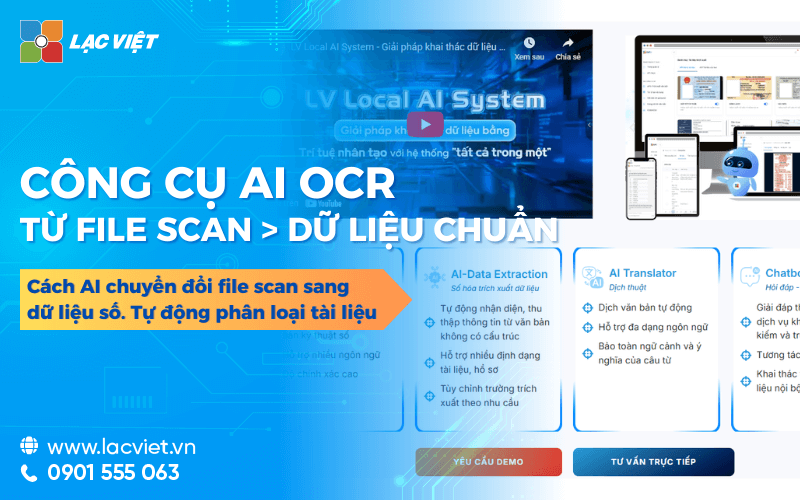
5.1. AI OCR in digitizing customer profile
AI OCR (Optical Character Recognition) is the character recognition technology with artificial intelligence, allows for “variable” image documents into digital data. This technology is key in digitized records, KYC, credit agreement, the transaction documents or the type of template internal.
If the former employee must enter each line of information from the ID/CCCD or contract paper up Core Banking system, and AI shall OCR automatic read – extract – categorical data in just a few seconds.
Actual values bring to the bank:
- Reduce 80% of the time input: AI OCR help shorten to 80% of the time processing of documents in the process, KYC, management, customer record.
- To limit errors crafts: Input wrong is the most common cause leading to delay approval or compliance risk. AI OCR maintain accuracy stability, are likely to learn more when the sample papers new.
- Connect directly with the Core Banking: Data is returned in the form structure, easy to put into the processing flow, such as open account, approval, credit or risk rating.
- Acceleration support number conversion: Thanks to automate the step input, the bank significantly reduced the processing time at the counter, enhance the customer experience in online services.
5.2. The storage system profile electronic documents LV SureDMS
LV SureDMS is the hosting platform – manage – lookup electronic document according to standard business. In the bank, ECM's role as the “database security”, to ensure records are secure, decentralized control, life cycle, material and meet the requirements of inspection and audit.
Can visualize LV SureDMS like “the electronic record standardized”, where all the relevant documents, customer, credit, transaction or collateral is stored, organized access is instant.
The actual value for the bank:
- Meet the standard storage of the financial sector – banking: includes authorization closely, log inspection, data encryption ensures document integrity.
- Seamless integration with Core Banking: Data is two-way link; staff only need one click to access the contract documents relating to a transaction or customer.
- Shorten the lookup time on the entire system: LV SureDMS help to significantly reduce operating costs by standardizing the entire process of storage.
- Increase the ability to comply with legal requirements: record is always ready to serve internal audit, the SBV or organizations other supervisors.
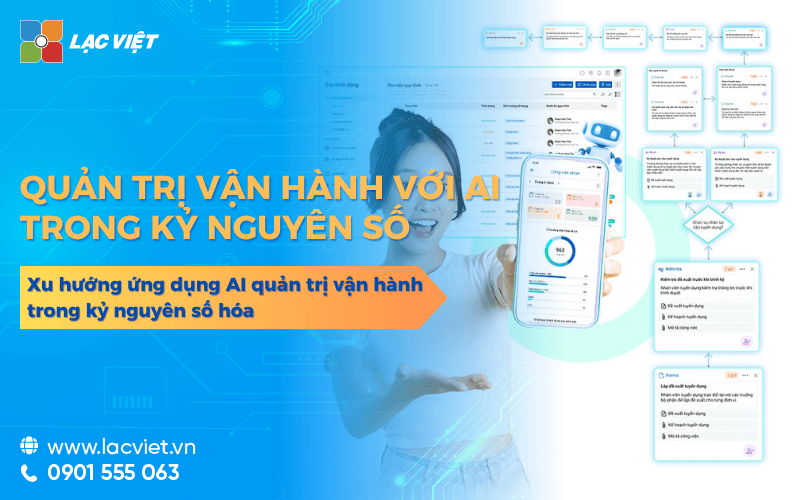
5.3. LV-DX Dynamic Workflow automation approval in the bank
LV-DX Dynamic Workflow is the system automates the process, allow to set processing steps, according to form, the approval, test conditions, duration SLA. When combined with the Core Banking workflow eliminates many operations and shorten the approval time.
Example approval process loan: ago profile, go through many parts manually, wait for a sign or send by email. Workflow auto-forwarding profile to the right people, the right steps and alert you when overdue handle.
Worth bringing back to the bank:
- Automate the process important: the loan – approval credit – appraisal of property – open limit – internal billing.
- Reduce the processing time of transactions thanks to threaded processing, automatic data sync.
- Support risk control: All processing steps are hosted stain, transparent, easy-to check out when in need.
- Enhance customer experience: timeout sharply reduced, limiting the status record is lost or mishandled process.
In the context of convert numbers to become the central strategy of the banking sector, the only investing in Core Banking is not enough. The grade the French open as AI OCR, ECM and Workflow not only help to digitize the entire data process but also create a platform to operate, flexible, transparent, cost savings long-term.
To build the system of cultural sustainability, businesses need to prioritize the platform capable of seamless integration with Core Banking, meet security standards in the financial sector and is flexible enough to expand in the future. Contact us Vietnam to get detailed consultation.