
Trong lĩnh vực tài chính, AI nổi bật với các ứng dụng như phân tích dữ liệu thời gian thực, dự báo xu hướng và tự động hóa quy trình kế toán giúp tối ưu hóa vận hành. Công nghệ AI này còn đóng vai trò then chốt trong việc phát hiện gian lận, quản trị rủi ro tín dụng và tối ưu hóa danh mục đầu tư thông qua các công cụ như Robot Advisors. Nhờ đó, doanh nghiệp có thể nâng cao hiệu suất hoạt động, giảm đáng kể chi phí và đảm bảo tính chính xác cho các quyết định chiến lược dựa trên dữ liệu thực tế
In an era where technology is developing rapidly, the application of artificial intelligence (AI) has become the key element to the business finance maintaining a competitive advantage. AI not only helps to improve operational efficiency, but also completely changed the way businesses approach data, risk management, and resource optimization. For businesses that are looking for opportunities to optimize operational processes to increase profit, the Application of AI in finance not only is a trend that is the key to breakthrough.
The same Lac Viet find out details in this article.
1. Painting app digital technology in the financial sector
- 83% of the chief financial officer (CFO) have and are investing in AI technology
- Improve performance up to 20%, while reducing operating costs from 10-25%
- Increase efficiency, financial forecast up to 76%reduce time data processing at 50%
- By 2025, average savings 40% of operating costs
- Help increase the accuracy up to 85% when predicted trend financial risk management
The financial industry is undergoing a revolution thanks to technology, especially artificial intelligence (AI). According to the report of McKinseythe business finance application AI can improve performance up to 20%, while reducing operating costs from 10-25%. The process of financial capital complex, easy to errors when done manually can now be automated with high accuracy, help businesses reduce risk, increase cash flow management, decision making based on real-time data.
Report of Accenture 2023 also pointed out that 83% of the chief financial officer (CFO) have and are investing in AI technology to optimize financial processes to improve efficiency.

The application AI data analysis in finance brings significant opportunities. AI has the ability to analyze financial data giant, given the forecast, optimize the process as important as financial planning, risk management. Follow PwCthe application AI in financial analysis can help businesses increase efficiency, financial forecast up to 76%reduce time data processing at 50%.
However, the biggest challenge lies in the cost of the initial investment and the ability to integrate AI into the current system. According to estimates, the business can cost about 7-10% of the budget IT for the deployment of AI in finance in the early stages. Added to that, security issues, legal compliance should be a top priority, particularly in the context of the rules on data security financial increasingly demanding.
App AI in finance not only help business save cost, but also bring long-term benefits. Gartner forecasts that by 2025, the business to adopt AI in financial management will save an average of 40% of operating costs. AI automates the accounting process, from invoice processing to check the risks, help reduce errors and increasing processing speed work.
In addition, AI also supports businesses in predicting financial trends, manage risks, to help increase the accuracy up to 85% according to the study of Forbes Insights in the year 2023. More importantly, AI also help ensure compliance with the law, especially as businesses increasingly have to face the strict rules about financial protection of customer information.
2. Vì sao AI trở thành xu hướng tất yếu của quản trị tài chính doanh nghiệp?
Trong nhiều năm, bộ phận tài chính – kế toán chủ yếu tập trung vào việc ghi nhận số liệu, lập báo cáo và kiểm soát chi phí. Tuy nhiên, khi môi trường kinh doanh ngày càng biến động, doanh nghiệp không chỉ cần những con số phản ánh quá khứ mà còn cần khả năng dự báo tương lai để đưa ra quyết định nhanh chóng chính xác hơn. Đây chính là lý do khiến ứng dụng AI trong tài chính trở thành xu hướng tất yếu trong chiến lược chuyển đổi số của nhiều tổ chức.
Khác với các công cụ phân tích truyền thống, AI có khả năng xử lý khối lượng dữ liệu lớn trong thời gian ngắn, tự động phát hiện các xu hướng, điểm bất thường, đưa ra dự báo dựa trên dữ liệu thực tế. Điều này giúp bộ phận tài chính chuyển từ vai trò ghi nhận và báo cáo sang vai trò tư vấn chiến lược cho ban lãnh đạo.
Thực tế cho thấy AI không còn là công nghệ dành riêng cho các tập đoàn công nghệ lớn. Theo khảo sát của Deloitte năm 2025, 80,5% chuyên gia tài chính kế toán tin rằng AI sẽ trở thành công cụ tiêu chuẩn trong lĩnh vực tài chính trong vòng 5 năm tới. Nghiên cứu cũng cho thấy các doanh nghiệp đã triển khai AI đang ghi nhận những cải thiện đáng kể về năng suất, khả năng phân tích dữ liệu và chất lượng ra quyết định.
Besides, báo cáo Deloitte APAC CFO Survey cho biết gần một nửa số Giám đốc Tài chính (CFO) tại khu vực châu Á – Thái Bình Dương tin rằng Generative AI sẽ tạo ra tác động đáng kể đến hoạt động tài chính doanh nghiệp trong vòng 2 năm tới. Điều này phản ánh sự thay đổi trong nhận thức của các nhà quản trị, khi AI không còn được xem là công cụ hỗ trợ đơn thuần mà đang trở thành nền tảng giúp nâng cao năng lực cạnh tranh.
Một trong những nguyên nhân quan trọng thúc đẩy doanh nghiệp ứng dụng AI trong tài chính là áp lực xử lý dữ liệu ngày càng lớn. Các doanh nghiệp hiện nay phải quản lý đồng thời dữ liệu kế toán, công nợ, ngân sách, dòng tiền, doanh thu, chi phí và nhiều chỉ số tài chính khác. Nếu thực hiện thủ công hoặc phụ thuộc vào các bảng tính rời rạc, việc tổng hợp và phân tích dữ liệu sẽ tốn nhiều thời gian, đồng thời tiềm ẩn nguy cơ sai sót.
Ví dụ, thay vì mất nhiều giờ để tổng hợp dữ liệu, dự báo dòng tiền cho tháng tiếp theo, hệ thống AI có thể tự động phân tích lịch sử giao dịch, xu hướng thanh toán của khách hàng và kế hoạch chi tiêu hiện tại để đưa ra dự báo gần như theo thời gian thực. Nhờ đó, doanh nghiệp có thể chủ động chuẩn bị nguồn vốn, hạn chế các rủi ro về thanh khoản.
Bên cạnh khả năng dự báo, AI còn giúp nâng cao hiệu quả quản trị rủi ro tài chính. Công nghệ này có thể nhanh chóng phát hiện những giao dịch bất thường, các khoản chi vượt ngân sách hoặc dấu hiệu gian lận mà con người khó nhận biết khi xử lý hàng nghìn giao dịch mỗi ngày. Điều này đặc biệt quan trọng đối với các doanh nghiệp có quy mô lớn hoặc vận hành nhiều chi nhánh.
Một yếu tố khác khiến AI trở thành xu hướng tất yếu là yêu cầu ra quyết định ngày càng nhanh. Trong bối cảnh thị trường liên tục thay đổi, các nhà quản lý không thể chờ đến cuối tháng hoặc cuối quý mới nhận được báo cáo tài chính. Họ cần dữ liệu cập nhật theo thời gian thực để đánh giá hiệu quả hoạt động, kiểm soát chi phí, điều chỉnh chiến lược kinh doanh kịp thời. AI giúp rút ngắn khoảng cách giữa dữ liệu và quyết định bằng cách tự động phân tích, tổng hợp, cung cấp các khuyến nghị dựa trên dữ liệu thực tế.
Có thể thấy rằng, AI không đơn thuần là một xu hướng công nghệ mà đang trở thành công cụ chiến lược giúp doanh nghiệp nâng cao hiệu quả quản trị tài chính, tối ưu chi phí vận hành và cải thiện chất lượng ra quyết định. Đối với các tổ chức đang tìm hiểu thông tin về ứng dụng AI trong tài chính, việc bắt đầu từ những bài toán thực tiễn như dự báo dòng tiền, quản lý chi phí hay tự động hóa báo cáo sẽ là bước đi phù hợp để tận dụng tối đa giá trị mà công nghệ này mang lại.
3. Ứng dụng AI trong tài chính nổi bật năm 2026
3.1 Ứng dụng AI phân tích dữ liệu tài chính theo thời gian thực
AI has the ability to handle large amounts of data from various sources such as financial statements, cash flow, economic indicators help businesses make decisions fast, accurate. Follow Deloittethe AI system can be reduced to 80% of the time data processing compared with manual method. For example, bank JP Morgan has deployed AI systems to analyze millions of transactions every day, help them identify investment opportunities and manage risks in a timely manner.
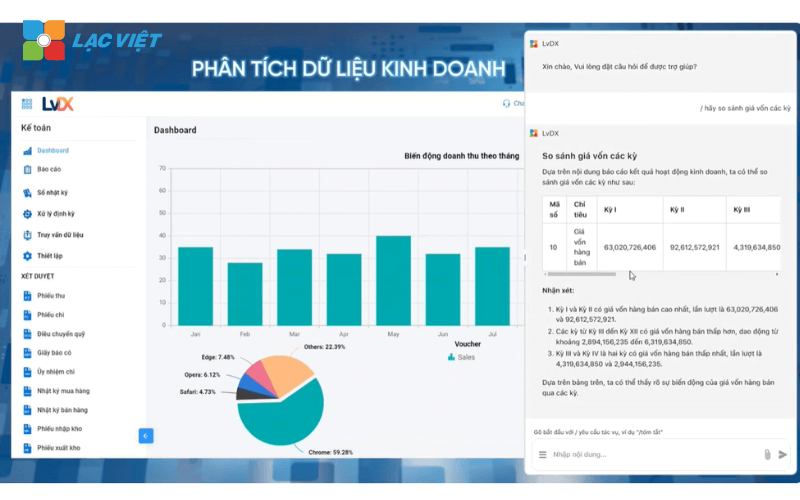
3.2 AI dự báo xu hướng tài chính và lập kế hoạch
AI business support accurate forecast, trends in finance, from which long-term planning based on analysis of historical data and the market data in real-time. Follow PwCbusiness application AI in financial forecasting can improve performance up to 20-30%. An example is Microsoft use AI to process optimization, financial forecast, helping them reduce the time to plan a budget at 50% compared to the past.
3.3 Ứng dụng AI tự động hóa quy trình kế toán
AI combined with OCR technology (Optical Character Recognition) ability to automatically import materials and dissection data from the invoices, vouchers, help accountants save time, minimize errors. Follow Gartnerapps , AI in accounting can reduce 90% error errors and data entry, compared with the manual method. Typical example is the Siemens company, has deployed AI to automate test procedures and data entry, bills, help reduce 30% processing time financial documents.

3.4 Phân tích rủi ro và phát hiện gian lận
AI has the ability to analyze millions of transactions to detect the abnormal behavior, from which warns of the activity potential fraud. Forbes reported that AI can improve the ability to detect fraud up to 95% compared with the traditional system. A successful example is PayPal, where AI is used to analyze the trading behavior of users, helping to reduce 33% of fraud in online transactions.
3.5 Ứng dụng AI phân tích và kiểm soát rủi ro tài chính
AI help businesses identify potential risks by analyzing historical data, market data and economic models. The AI system has the ability to take out the prediction of the risk of loss or market fluctuations with higher accuracy. Follow McKinseythe use of AI to manage financial risks to help reduce 10-15% losses due to the incident unforeseen financial. For example, the bank HSBC has used AI to improve the ability to assess credit risk, reduce the rate of bad debt from 8% at 5% in the next two years.

3.6 Phòng ngừa rủi ro tín dụng
AI has the ability to assess the credit profile of the customer based on behavioral data, financial history, from that make a decision reasonable credit. Follow Accenturethe bank applied AI in the analysis of credit has reduced the proportion of bad loans at 20-30%.
Another example is American Express, using AI to predict consumer behavior, the solvency of the customer from that process optimization browse credit card and risk control.
3.7 Ứng dụng AI tối ưu hóa danh mục đầu tư
AI has the ability to analyze the market volatility, from which the proposed investment strategies optimization based on the financial situation and objectives of the business. Follow BlackRockapps , AI on management portfolio can help your business increase profitability ratio up 15-20% compared with traditional strategies. For example, the investment company Bridgewater Associates were using AI to optimize the portfolio, help them increase profitability, manage risk effectively.
3.8 Robot Advisors
Robot Advisors is the application AI help investment advisory automatically based on the profile and financial goals of our clients. AI uses personal data, combined with complex algorithms to make decisions appropriate investment. Follow Statistamore $1.4 trillion the property is being managed by the Robot Advisors globally by the year 2023. For example, Wealthfront and Betterment are two of the platform Robots expert Advisors top today, to help customers optimize investment strategies with low cost but high efficiency.

The switch number in the financial sector is going strong and artificial intelligence plays a central role in this revolution. The Application of AI in finance not only to help businesses optimize existing processes, but also create the opportunity to increase long-term growth, from improving financial forecasting to optimize portfolio. For those businesses willing to embrace new technologies, AI will be the main motivation to help enhance performance and promote development. Let's start the journey app AI from today to ensure that your business not only keep up the trend, but also the lead in the play, convert the number.
4. Doanh nghiệp nào nên ưu tiên ứng dụng AI trong tài chính?
Không phải mọi doanh nghiệp đều cần triển khai AI ở quy mô lớn ngay từ đầu. Tuy nhiên, những doanh nghiệp có khối lượng dữ liệu tài chính lớn, quy trình xử lý phức tạp hoặc yêu cầu ra quyết định nhanh sẽ là nhóm có thể nhìn thấy hiệu quả rõ rệt nhất khi ứng dụng AI trong tài chính.
4.1 Doanh nghiệp sản xuất
Các doanh nghiệp sản xuất thường phải quản lý đồng thời nhiều yếu tố như chi phí nguyên vật liệu, chi phí nhân công, chi phí sản xuất chung, tồn kho và dòng tiền vận hành. Chỉ cần một biến động nhỏ về giá nguyên liệu hoặc nhu cầu thị trường cũng có thể ảnh hưởng đáng kể đến lợi nhuận.
Trong bối cảnh đó, AI giúp doanh nghiệp dự báo nhu cầu sản xuất, phân tích biến động chi phí và nhận diện những khoản chi chưa tối ưu. Thay vì chờ đến cuối kỳ kế toán mới phát hiện giá thành sản phẩm tăng cao, nhà quản lý có thể nhận được cảnh báo sớm để đưa ra phương án điều chỉnh kịp thời.
Đặc biệt, khi dữ liệu sản xuất được kết nối với hệ thống tài chính, AI có thể hỗ trợ dự báo lợi nhuận theo từng dòng sản phẩm, giúp doanh nghiệp tập trung nguồn lực vào các sản phẩm mang lại hiệu quả cao nhất.
4.2 Doanh nghiệp thương mại – phân phối
Đối với doanh nghiệp thương mại, bài toán lớn nhất thường nằm ở việc kiểm soát doanh thu, hàng tồn kho, công nợ khách hàng, dòng tiền. Khi số lượng đơn hàng tăng lên hàng nghìn hoặc hàng chục nghìn giao dịch mỗi tháng, việc phân tích dữ liệu bằng phương pháp thủ công trở nên khó khăn và tốn nhiều nguồn lực.
AI có thể giúp doanh nghiệp dự báo doanh số bán hàng, phân tích xu hướng tiêu dùng và đánh giá khả năng thanh toán của khách hàng dựa trên lịch sử giao dịch. Điều này giúp bộ phận tài chính chủ động hơn trong việc lập kế hoạch vốn lưu động, giảm thiểu rủi ro nợ xấu.
Theo báo cáo KPMG Global AI in Finance Report 2025, hơn 70% tổ chức được khảo sát đã triển khai AI trong các hoạt động tài chính và ghi nhận sự cải thiện đáng kể về tốc độ phân tích dữ liệu cũng như chất lượng ra quyết định.
4.3 Doanh nghiệp đa chi nhánh
Khi doanh nghiệp mở rộng quy mô hoạt động, việc tổng hợp dữ liệu tài chính từ nhiều chi nhánh thường gặp tình trạng chậm trễ, thiếu đồng nhất, khó kiểm soát.
AI giúp tự động thu thập, chuẩn hóa và phân tích dữ liệu từ nhiều địa điểm khác nhau trên cùng một hệ thống. Nhờ đó, ban lãnh đạo có thể theo dõi doanh thu, chi phí, hiệu quả hoạt động của từng chi nhánh theo thời gian thực thay vì phải chờ các báo cáo tổng hợp định kỳ.
Khả năng phát hiện bất thường của AI cũng giúp doanh nghiệp nhanh chóng nhận diện các khoản chi vượt ngân sách hoặc những giao dịch có dấu hiệu rủi ro tại từng đơn vị thành viên.
4.4 Tập đoàn cần hợp nhất dữ liệu tài chính
Đối với các tập đoàn hoặc doanh nghiệp sở hữu nhiều công ty con, việc hợp nhất dữ liệu tài chính luôn là một trong những nghiệp vụ phức tạp và tốn nhiều thời gian.
AI có thể hỗ trợ đối chiếu dữ liệu giữa các đơn vị, phát hiện sai lệch, tự động hóa một phần quy trình hợp nhất báo cáo. Điều này giúp giảm đáng kể khối lượng công việc thủ công cho bộ phận kế toán tài chính, đồng thời nâng cao độ chính xác của các báo cáo quản trị.
Thay vì mất nhiều tuần để hoàn thành báo cáo hợp nhất, doanh nghiệp có thể rút ngắn thời gian xử lý, cung cấp thông tin kịp thời cho ban điều hành.
4.5 Doanh nghiệp đang chuyển đổi số và triển khai ERP
Những doanh nghiệp đã hoặc đang triển khai hệ thống ERP thường có lợi thế lớn khi ứng dụng AI trong tài chính. Dữ liệu đã được tập trung trên một nền tảng chung giúp AI dễ dàng khai thác và phân tích hơn.
Khi kết hợp với ERP, AI có thể tự động tạo báo cáo quản trị, dự báo dòng tiền, phân tích hiệu quả kinh doanh, hỗ trợ nhà quản lý đưa ra quyết định dựa trên dữ liệu thực tế. Đây cũng là nhóm doanh nghiệp có khả năng thu hồi vốn đầu tư AI nhanh hơn nhờ tận dụng được hạ tầng số đã có sẵn.
Có thể thấy rằng, doanh nghiệp càng sở hữu nhiều dữ liệu và quy trình tài chính càng phức tạp thì giá trị AI mang lại càng rõ rệt. Đối với các tổ chức đang tìm hiểu thông tin về ứng dụng AI trong tài chính, việc xác định đúng bài toán cần giải quyết sẽ quan trọng hơn việc chạy theo các xu hướng công nghệ mới.
CONTACT INFORMATION:
- Lac Viet Computing Corporation
- Hotline: 0901 555 063 | (+84.28) 3842 3333
- Email: info@lacviet.vn – Website: https://lacviet.vn
- Headquarters: 23 Nguyen Thi Huynh, P. 8, Q. Phu Nhuan, Ho Chi Minh city




![[Trọn bộ] File Excel mẫu báo cáo chi phí sản xuất kèm hướng dẫn lập chi tiết](https://lacviet.vn/wp-content/uploads/2025/02/bao-cao-chi-phi-san-xuat.png)
![[Mẫu chuẩn] Báo cáo doanh thu doanh số bán hàng bằng Excel theo ngày, tháng](https://lacviet.vn/wp-content/uploads/2025/02/mau-bao-cao-doanh-thu.png)
![[ĐẦY ĐỦ] Mẫu báo cáo tài chính, tình hình tài chính file excel theo Thông tư 99, 133, 200](https://lacviet.vn/wp-content/uploads/2025/04/mau-bao-cao-tai-chinh.png)