In the context of competition increasingly fierce, a process, personnel management, it becomes important platform for enterprises to maintain stable operation for sustainable development. This process not only helps to reduce errors in recruitment, training or pay salaries, but also improve the experience of staff from that increase performance and cohesion.
Therefore, many organizations and businesses are looking for information about the process of personnel management, with special attention to the template process or flow chart hr management, clear, easy to apply, as well as the process is standardized according to ISO standard. The construction of a process suitable not only is compliance with internal regulations which is also a strategic tool to help businesses better management of human resources in the long-term development.
The same Lac Viet find out details in this article.
1. Process personnel management, what is?
Process personnel management is the set of steps, guidelines specific to business human resources management in a systematic way, from when a candidate filing to the time they leave. In other words, this is the “map” to help businesses ensure all activities related to the place orderly, transparent consistency.

For example easy to understand: when a company needs staff recruitment, process management, personnel will only get the steps to perform as determining human resource needs, posting vacancies, interviews, contract, training, integration, performance evaluation, construction salary and bonus, and the last is the process of transfer when employees leave. Thanks to a clear process, businesses will limit status recruit the wrong people, training, overlapping or handle errors in salaries and bonuses.
The role of hr processes not only in administration but also the tools to support strategy. When designed properly, the process to help businesses:
- Enhance effective management: reduce dependence on the individual, ensuring every stitch personnel will adhere to standards of consistency.
- Legal compliance: to avoid risks when audit or inspection labor.
- Improving the experience of employees: new employees quickly, current employees are rated fair, the full enjoyment of rights.
- Optimal cost: reduce wasted time, resources, increasing labor productivity.
Therefore, understanding the concept of the role of the management process is an important first step for businesses to build a management system, hr professional, in accordance with the actual operation-oriented long-term development.
2. Synthesis of the process of personnel management in the enterprise
2.1 Quy trình hoạch định và dự báo nguồn nhân lực trong doanh nghiệp
Quy trình hoạch định nguồn nhân lực là quá trình xác định nhu cầu nhân sự tương lai bao gồm số lượng, kỹ năng, vị trí cần tuyển – dựa trên chiến lược kinh doanh của doanh nghiệp. Đây không chỉ là việc “đếm người”, mà là để đảm bảo rằng vào thời điểm nhất định, doanh nghiệp có đúng người đúng năng lực cho công việc cần làm.
Vì sao doanh nghiệp cần dự báo?
- Respond to fluctuations: In the context of labour market change rapidly, if the business is not forecast personnel, very prone to shortage of manpower key or have the excess.
- Optimal cost: Recruit massively or too late are wasting: recruitment soon lose the cost of maintaining, recruitment of late, I have to pay higher or contingent worker. Planning helps to balance the cost.
- Sustainable development: having a clear plan to help businesses build route progression, succession planning (succession plan), avoid the “off the” when leaders leave.
Quy trình hoạch định, dự báo nguồn nhân lực giúp doanh nghiệp chủ động về nhân sự, gắn hoạt động HR với chiến lược kinh doanh, hạn chế rủi ro thiếu hụt nguồn lực.
Bước 1: Thu thập thông tin chiến lược kinh doanh, kế hoạch phát triển
Bộ phận nhân sự cần phối hợp với ban lãnh đạo và các phòng ban để nắm rõ:
- Mục tiêu kinh doanh ngắn hạn/dài hạn
- Kế hoạch mở rộng quy mô, chi nhánh, dự án mới
- Định hướng thay đổi mô hình tổ chức, công nghệ, sản phẩm
Đây là cơ sở để xác định nhu cầu nhân sự trong tương lai, tránh hoạch định nhân sự rời rạc, không bám sát chiến lược.
Bước 2: Phân tích hiện trạng nguồn nhân lực
HR tiến hành rà soát toàn bộ nguồn nhân lực hiện có, bao gồm:
- Số lượng nhân sự theo từng phòng ban, vị trí
- Cơ cấu độ tuổi, thâm niên, trình độ chuyên môn
- Năng lực, kỹ năng, hiệu suất làm việc
- Tỷ lệ nghỉ việc, biến động nhân sự
Việc phân tích hiện trạng giúp doanh nghiệp nhận diện rõ điểm mạnh, điểm thiếu hụt của đội ngũ hiện tại.
Bước 3: Dự báo nhu cầu nhân sự theo từng giai đoạn
Dựa trên chiến lược kinh doanh và hiện trạng nhân sự, HR tiến hành dự báo:
- Nhu cầu tuyển mới cho các vị trí phát sinh
- Nhu cầu thay thế do nghỉ việc, nghỉ hưu, luân chuyển
- Nhu cầu nhân sự theo từng giai đoạn: ngắn hạn, trung hạn, dài hạn
Dự báo cần linh hoạt, có kịch bản cho các tình huống tăng trưởng hoặc biến động thị trường.
Bước 4: Đánh giá nguồn cung nhân sự nội bộ, thị trường lao động
Doanh nghiệp cần đánh giá song song hai nguồn:
- Nguồn nội bộ: khả năng thăng tiến, điều chuyển, kế nhiệm
- Nguồn bên ngoài: mức độ sẵn có của thị trường lao động, chi phí tuyển dụng
Bước này giúp doanh nghiệp xác định nên ưu tiên phát triển nội bộ hay tuyển mới từ bên ngoài.
Bước 5: Lập kế hoạch nhân sự tổng thể
Trên cơ sở dự báo đánh giá nguồn cung, HR xây dựng kế hoạch nhân sự bao gồm:
- Kế hoạch tuyển dụng
- Kế hoạch đào tạo phát triển
- Ngân sách nhân sự dự kiến
- Kế hoạch kế nhiệm cho các vị trí trọng yếu
Kế hoạch cần được trình duyệt, thống nhất với ban lãnh đạo.
Bước 6: Theo dõi, cập nhật, điều chỉnh định kỳ
Trong quá trình triển khai, HR cần:
- So sánh kế hoạch và thực tế
- Cập nhật khi có thay đổi chiến lược hoặc biến động nhân sự
- Điều chỉnh kế hoạch kịp thời để đảm bảo tính khả thi
2.2 Quy trình tuyển dụng trong doanh nghiệp
Recruitment process bài bản giúp doanh nghiệp tuyển đúng người, đúng thời điểm, tối ưu chi phí, nâng cao trải nghiệm ứng viên.
Bước 1: Tiếp nhận, xác nhận nhu cầu tuyển dụng
Các phòng ban gửi đề xuất tuyển dụng nêu rõ:
- Vị trí cần tuyển
- Lý do tuyển dụng (tuyển mới, thay thế)
- Thời gian cần nhân sự
Bộ phận HR kiểm tra tính hợp lý, xác nhận nhu cầu trước khi triển khai.
Bước 2: Xây dựng mô tả công việc và tiêu chí tuyển chọn
HR phối hợp với quản lý chuyên môn để:
- Hoàn thiện mô tả công việc (nhiệm vụ, trách nhiệm)
- Xác định yêu cầu về kỹ năng, kinh nghiệm, trình độ
- Thống nhất mức lương, chế độ đãi ngộ
Đây là bước quan trọng quyết định chất lượng đầu vào ứng viên.
Bước 3: Lập kế hoạch tuyển dụng
Kế hoạch tuyển dụng cần làm rõ:
- Kênh tuyển dụng phù hợp (website, mạng xã hội, nền tảng tuyển dụng)
- Thời gian tuyển dụng
- Estimated budget
Việc lập kế hoạch giúp kiểm soát tiến độ, chi phí tuyển dụng.
Bước 4: Đăng tuyển thu hút ứng viên
HR triển khai đăng tin tuyển dụng, đồng thời:
- Truyền thông thương hiệu tuyển dụng
- Kích hoạt chương trình giới thiệu nội bộ (nếu có)
- Theo dõi hiệu quả từng kênh tuyển dụng
Bước 5: Sàng lọc hồ sơ và phỏng vấn
Quy trình sàng lọc thường gồm:
- Lọc hồ sơ theo tiêu chí
- Phỏng vấn vòng HR
- Phỏng vấn chuyên môn với quản lý
- Kiểm tra năng lực hoặc bài test (nếu cần)
Bước 6: Đánh giá ứng viên, đề xuất tuyển dụng
Sau phỏng vấn, HR tổng hợp kết quả đánh giá, so sánh ứng viên và:
- Đề xuất ứng viên phù hợp
- Thống nhất mức lương, điều kiện làm việc
- Trình cấp có thẩm quyền phê duyệt
Bước 7: Gửi thư mời nhận việc, hoàn tất thủ tục tiếp nhận
HR gửi thư mời nhận việc, xác nhận ngày đi làm và:
- Chuẩn bị hồ sơ nhân sự
- Chuyển thông tin sang quy trình onboarding
Indicators to be measured
- Time-to-hire: the time from the job posting to when candidates receive offer.
- Cost-per-hire: the average cost for each new employee (including the cost of posting news, interviews, free headhunter, onboarding).
- Rate accept the offer (offer acceptance rate): how much % of applicants accepted.
- Retention after 6-12 months (retention rate): to assess the quality of recruitment.
Associated with flow charts, processes, personnel management: When designing flow charts, and process personnel management (HR process flow), you should include both flow careers – from entry requirements, approve, promote, review records, interview to sign a contract. This ensures that all steps are the person responsible for clear, reduce risk, omissions, help transparent with leadership and related parts.
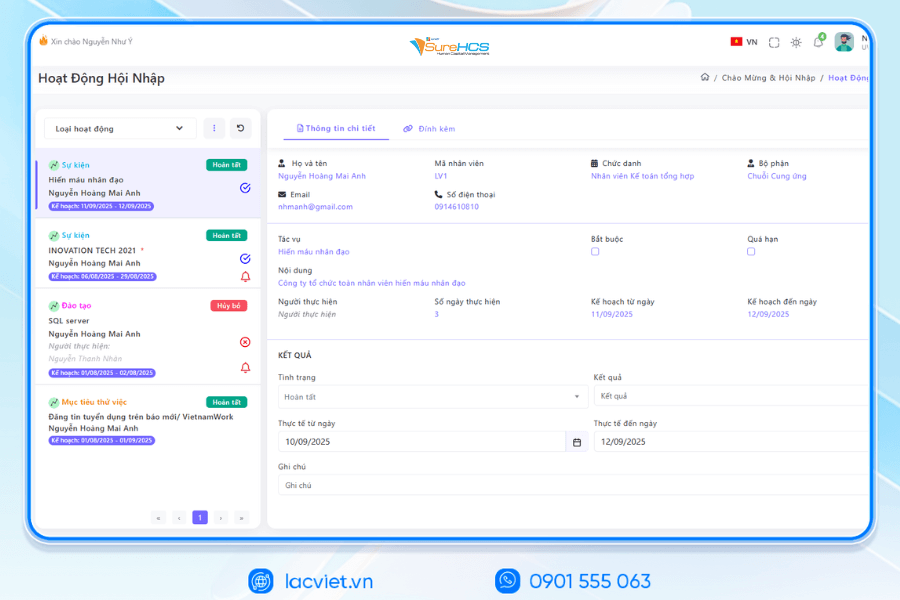
2.3 the process of receiving the integration of new employees (Onboarding)
The “onboarding” (integration of new employees) is not simply for the new watch company rules — this is very important stage to new people feel the culture, the support and long term commitment from the business. If onboarding is not good, the rate of quitting in the first few months (early turnover) very high.
Một lưu đồ quy trình quản lý nhân sự rõ ràng cho onboarding sẽ giúp xác định các bước như:
Bước 1: Chuẩn bị trước ngày nhận việc
Trước khi nhân viên mới đi làm, HR cần:
- Soạn hợp đồng lao động, hồ sơ nhân sự
- Chuẩn bị thiết bị, tài khoản hệ thống
- Thông báo cho các bộ phận liên quan
Sự chuẩn bị đầy đủ giúp tạo ấn tượng chuyên nghiệp ngay từ đầu.
Bước 2: Đón tiếp – giới thiệu chung
Trong ngày đầu nhận việc:
- Đón tiếp, hướng dẫn thủ tục ban đầu
- Giới thiệu về doanh nghiệp, văn hóa, giá trị cốt lõi
- Giới thiệu cơ cấu tổ chức và đồng nghiệp
Bước 3: Hướng dẫn nội quy, chính sách quy trình làm việc
Nhân viên mới được phổ biến:
- Nội quy lao động
- Chính sách nhân sự, lương thưởng, phúc lợi
- Quy trình làm việc, quy định phối hợp nội bộ
Bước 4: Đào tạo hội nhập các nghiệp vụ cơ bản
Doanh nghiệp tổ chức:
- Đào tạo hội nhập chung
- Đào tạo nghiệp vụ theo vị trí
- Hướng dẫn sử dụng các hệ thống, công cụ làm việc
Bước 5: Phân công người hướng dẫn hoặc quản lý hỗ trợ
Quản lý trực tiếp hoặc người hướng dẫn có trách nhiệm:
- Theo dõi quá trình làm việc
- Hỗ trợ, giải đáp thắc mắc
- Đánh giá mức độ hòa nhập
Bước 6: Theo dõi đánh giá trong thời gian thử việc
Trong thời gian thử việc, HR và quản lý:
- Đánh giá định kỳ theo tiêu chí
- Ghi nhận phản hồi hai chiều
- Điều chỉnh mục tiêu công việc nếu cần
Bước 7: Xác nhận kết quả thử việc, ký hợp đồng chính thức
Kết thúc thử việc:
- Đánh giá kết quả làm việc
- Thông báo kết quả thử việc
- Ký hợp đồng lao động chính thức, cập nhật hồ sơ
When there is flow chart, HR and management are clear responsibilities to ensure no step is left implicit, new people feel welcome, to be oriented right from the start.
2.4 process attendance – payroll – benefits
Quy trình chấm công – tính lương & phúc lợi là quy trình nhân sự mang tính vận hành cốt lõi, ảnh hưởng trực tiếp đến quyền lợi người lao động và mức độ tuân thủ pháp luật của doanh nghiệp. Chỉ cần sai sót nhỏ cũng có thể dẫn đến tranh chấp, khiếu nại hoặc rủi ro pháp lý.
Bước 1: Ghi nhận thời gian làm việc, nghỉ phép, làm thêm giờ
Doanh nghiệp thực hiện ghi nhận thời gian làm việc thông qua:
- Hệ thống chấm công (vân tay, khuôn mặt, thẻ từ, app)
- Đăng ký ca làm việc, ca kíp, lịch làm thêm giờ
- Ghi nhận các loại nghỉ: phép năm, nghỉ ốm, nghỉ không lương, nghỉ lễ
Dữ liệu chấm công là đầu vào quan trọng nhất của quy trình tính lương, do đó cần đảm bảo đầy đủ, chính xác nhất quán.
Bước 2: Kiểm tra, đối soát phê duyệt dữ liệu chấm công
Trước khi tính lương, dữ liệu chấm công cần được:
- Nhân viên kiểm tra, xác nhận
- Quản lý trực tiếp phê duyệt công, làm thêm, nghỉ phép
- HR tổng hợp và rà soát các trường hợp bất thường
Bước này giúp hạn chế sai sót giảm tranh chấp về công – lương sau khi chi trả.
Bước 3: Tính lương theo quy chế lương thưởng đã ban hành
HR tiến hành tính lương dựa trên:
- Lương cơ bản hoặc lương theo vị trí
- Phụ cấp, trợ cấp
- Tiền làm thêm giờ, làm ca đêm
- Thưởng KPI, thưởng hiệu suất (nếu có)
- The deduction under the internal rules
Việc tính lương cần bám sát quy chế lương thưởng đã được ban hành và truyền thông rõ ràng cho người lao động.
Bước 4: Tính bảo hiểm bắt buộc theo quy định pháp luật
Doanh nghiệp thực hiện:
- Tính, trích nộp BHXH, BHYT, BHTN
- Phân tách phần doanh nghiệp đóng và người lao động đóng
- Kiểm soát mức lương làm căn cứ đóng bảo hiểm
Bước này yêu cầu HR cập nhật thường xuyên các quy định pháp luật để đảm bảo tuân thủ.
Bước 5: Khấu trừ, quyết toán thuế thu nhập cá nhân
HR thực hiện:
- Tính thu nhập chịu thuế
- Áp dụng giảm trừ gia cảnh
- Khấu trừ thuế TNCN theo biểu lũy tiến
- Tổng hợp dữ liệu phục vụ quyết toán thuế
Quy trình này cần đảm bảo tính chính xác minh bạch để tránh khiếu nại từ người lao động.
Bước 6: Kiểm tra, phê duyệt bảng lương/chi trả lương
Trước khi chi trả, bảng lương cần:
- Được HR kiểm tra lần cuối
- Trình cấp quản lý hoặc ban giám đốc phê duyệt
- Thực hiện chi trả qua ngân hàng hoặc tiền mặt
- Phát phiếu lương cho người lao động
Bước 7: Quản lý phúc lợi đãi ngộ nhân viên
Ngoài lương, HR quản lý:
- Phúc lợi bắt buộc theo luật
- Phúc lợi tự nguyện: bảo hiểm sức khỏe, thưởng lễ Tết, hỗ trợ khác
- Theo dõi ngân sách và mức độ sử dụng phúc lợi
2.5 evaluation process, performance
Popular models (OKR, KPI)
- Key Performance Indicators (KPIS): is the quantitative indicators used to measure the efficiency of work of the individual or department (e.g., sales, contract number, error rate). KPI helps enterprises assess whether the employee has achieved strategic goals or not.
- OKR (Objectives & Key Results): is placing the ambitious goal (Objective) attached to the result key (Key Results) to measure progress. For example: “Increase customer satisfaction” (Objective) → result: “Reduce the rate of complaining at below 3%,” “Increase the score NPS up 50 points”. OKR is preferred because of creating transparency, encourage bonding between your team and your business goals.
- Many businesses today use a combination of both: KPI to measure the performance stable, OKR to promote strategic objectives, innovation.
Quy trình đánh giá hiệu suất giúp doanh nghiệp đo lường chính xác mức độ đóng góp của nhân viên, từ đó làm căn cứ cho lương thưởng, đào tạo phát triển.
Bước 1: Xây dựng tiêu chí, phương pháp đánh giá hiệu suất
Doanh nghiệp xác định:
- Mục tiêu công việc theo từng vị trí
- Hệ thống đánh giá phù hợp (KPI, OKR hoặc kết hợp)
- Thang điểm, trọng số đánh giá
Tiêu chí đánh giá cần rõ ràng, đo lường được phù hợp thực tế.
Bước 2: Truyền thông mục tiêu và quy trình đánh giá
HR và quản lý:
- Truyền thông mục tiêu đánh giá đến nhân viên
- Giải thích cách chấm điểm, xếp loại
- Thống nhất kỳ đánh giá (tháng, quý, năm)
Việc truyền thông rõ ràng giúp nhân viên hiểu mình cần đạt điều gì.
Bước 3: Theo dõi ghi nhận kết quả làm việc
Trong suốt kỳ đánh giá:
- Quản lý theo dõi tiến độ công việc
- Ghi nhận kết quả, thành tích và vấn đề phát sinh
- Thu thập dữ liệu phục vụ đánh giá cuối kỳ
Bước 4: Nhân viên tự đánh giá hiệu suất
Nhân viên thực hiện:
- Tự đánh giá kết quả công việc
- Đối chiếu mục tiêu đã cam kết
- Nêu khó khăn, đề xuất hỗ trợ
Bước này giúp tăng tính chủ động, trách nhiệm của người lao động.
Bước 5: Quản lý đánh giá xếp loại hiệu suất
Quản lý trực tiếp:
- Đánh giá kết quả làm việc của nhân viên
- So sánh với tiêu chí đã đặt ra
- Xếp loại hiệu suất theo quy định
Việc đánh giá cần khách quan, có căn cứ rõ ràng.
Bước 6: Trao đổi phản hồi hai chiều (Feedback)
Quản lý và nhân viên:
- Trao đổi về kết quả đánh giá
- Ghi nhận điểm mạnh, điểm cần cải thiện
- Thống nhất mục tiêu cho kỳ tiếp theo
Bước 7: Liên kết kết quả đánh giá với chính sách nhân sự
Kết quả đánh giá được sử dụng làm căn cứ cho:
- Thưởng hiệu suất, điều chỉnh lương
- Đề xuất đào tạo, phát triển
- Quy hoạch, thăng tiến hoặc điều chuyển
Thanks to the evaluation process, the performance basically fair, businesses can detect early potential employees, build a training plan or progression, thereby reducing the risk of losing good people or misjudged capacity.
2.6 Quy trình đào tạo phát triển nhân sự trong doanh nghiệp
Phương pháp đánh giá nhu cầu đào tạo:
- First, HR should analyze results to evaluate performance (KPI/OKR), determine the strengths – weaknesses of the individual: who needs technical skills, who need management skills or software.
- Can use online survey (survey): ask employees see that they lack nothing like learning in any form (online class directly, mentoring).
- Analysis of business strategy: if the company towards the transformation of HR need to take into demand “reskilling” (updated new skills) for many employees.
- Combined with market data resources: review, trends, skills, technology is favored in order to ensure the proper training with the future.
Quy trình đào tạo phát triển nhân sự giúp doanh nghiệp nâng cao năng lực đội ngũ và xây dựng nguồn nhân lực kế thừa.
Step 1: Identify training needs
Nhu cầu đào tạo được xác định từ:
- Chiến lược phát triển doanh nghiệp
- Kết quả đánh giá hiệu suất
- Khoảng cách năng lực của nhân viên
Bước 2: Phân loại và ưu tiên nhu cầu đào tạo
HR phân loại:
- Đào tạo bắt buộc
- Đào tạo nâng cao chuyên môn
- Đào tạo kỹ năng quản lý, lãnh đạo
Việc ưu tiên giúp sử dụng ngân sách đào tạo hiệu quả.
Bước 3: Lập kế hoạch đào tạo, ngân sách
Kế hoạch đào tạo bao gồm:
- Nội dung, hình thức đào tạo
- Audience participation
- Thời gian chi phí đào tạo
Bước 4: Triển khai đào tạo
Doanh nghiệp tổ chức:
- Đào tạo nội bộ
- Đào tạo thuê ngoài
- Đào tạo trực tuyến hoặc trực tiếp
Bước 5: Theo dõi và quản lý quá trình đào tạo
HR theo dõi:
- Tỷ lệ tham gia
- Kết quả học tập
- Mức độ hoàn thành khóa học
Bước 6: Đánh giá hiệu quả đào tạo
Sau đào tạo, doanh nghiệp đánh giá:
- Mức độ hài lòng của học viên
- Khả năng áp dụng vào công việc
- Tác động đến hiệu suất làm việc
Bước 7: Xây dựng lộ trình phát triển nghề nghiệp
Trên cơ sở đào tạo, đánh giá:
- Xây dựng lộ trình nghề nghiệp cho nhân viên
- Chuẩn bị đội ngũ kế thừa
- Gắn đào tạo với thăng tiến, giữ chân nhân tài
2.7 Quy trình quản lý quan hệ lao động, tuân thủ pháp luật trong doanh nghiệp
Quy trình quản lý quan hệ lao động và tuân thủ pháp luật giúp doanh nghiệp xây dựng môi trường làm việc ổn định, công bằng, đồng thời hạn chế rủi ro tranh chấp vi phạm quy định của pháp luật lao động.
Bước 1: Xây dựng, ban hành, phổ biến nội quy lao động
Business need:
- Xây dựng nội quy lao động phù hợp với quy mô, đặc thù hoạt động
- Đăng ký nội quy lao động với cơ quan quản lý nhà nước (nếu thuộc diện bắt buộc)
- Phổ biến nội quy đến toàn bộ người lao động
Nội quy lao động là căn cứ pháp lý quan trọng trong quản lý kỷ luật xử lý vi phạm.
Bước 2: Ký kết, quản lý, theo dõi hợp đồng lao động
Bộ phận nhân sự thực hiện:
- Ký kết hợp đồng lao động đúng loại, đúng thời hạn
- Theo dõi thời hạn hợp đồng để gia hạn hoặc chấm dứt kịp thời
- Lưu trữ hợp đồng, hồ sơ lao động đầy đủ, bảo mật
Việc quản lý hợp đồng chặt chẽ giúp doanh nghiệp tránh rủi ro pháp lý và đảm bảo quyền lợi người lao động.
Bước 3: Quản lý việc thực hiện quyền, nghĩa vụ của người lao động
Doanh nghiệp cần theo dõi:
- Giờ làm việc, giờ nghỉ ngơi
- Nghỉ phép, nghỉ lễ, nghỉ ốm
- Thực hiện các chế độ bảo hiểm, phúc lợi
Bước này giúp đảm bảo sự công bằng, tuân thủ quy định pháp luật trong suốt quá trình làm việc.
Bước 4: Tiếp nhận và giải quyết khiếu nại, phản ánh của người lao động
Quy trình xử lý khiếu nại thường bao gồm:
- Tiếp nhận phản ánh từ người lao động
- Xác minh thông tin, thu thập bằng chứng
- Trao đổi, đối thoại giữa các bên liên quan
- Đưa ra phương án giải quyết phù hợp
Việc giải quyết kịp thời giúp hạn chế mâu thuẫn leo thang thành tranh chấp.
Bước 5: Thực hiện kỷ luật lao động đúng quy trình pháp lý
Khi phát sinh vi phạm, doanh nghiệp cần:
- Xác minh hành vi vi phạm
- Lập biên bản vi phạm
- Tổ chức họp xử lý kỷ luật theo đúng quy định
- Ban hành quyết định kỷ luật, lưu hồ sơ
Mọi hình thức kỷ luật phải đảm bảo đúng trình tự, đúng căn cứ pháp lý để tránh rủi ro khiếu kiện.
Bước 6: Đối thoại định kỳ và duy trì quan hệ lao động hài hòa
Doanh nghiệp tổ chức:
- Đối thoại định kỳ giữa người lao động và người sử dụng lao động
- Trao đổi về điều kiện làm việc, thu nhập, phúc lợi
- Tiếp nhận kiến nghị, đề xuất cải thiện
Đối thoại giúp tăng tính minh bạch gắn kết trong tổ chức.
Bước 7: Thực hiện báo cáo, làm việc với cơ quan quản lý nhà nước
HR chịu trách nhiệm:
- Báo cáo lao động định kỳ
- Làm việc với cơ quan lao động, bảo hiểm, công đoàn
- Chuẩn bị hồ sơ khi có thanh tra, kiểm tra
Bước này đảm bảo doanh nghiệp tuân thủ đầy đủ nghĩa vụ pháp lý.
Through process management, labor relations closely, business to better control legal risks, hold the prestige of internal building work environment fair.
2.8 process the holiday & handing (Offboarding)
The steps to ensure no loss of data, does not violate legal
Quy trình nghỉ việc bàn giao giúp doanh nghiệp kết thúc quan hệ lao động một cách chuyên nghiệp, bảo vệ quyền lợi hai bên, hạn chế rủi ro phát sinh sau khi nhân viên nghỉ việc.
Bước 1: Tiếp nhận thông tin nghỉ việc
Việc nghỉ việc có thể xuất phát từ:
- Đơn xin nghỉ việc của người lao động
- Quyết định chấm dứt hợp đồng của doanh nghiệp
HR tiếp nhận thông tin, kiểm tra căn cứ pháp lý của việc nghỉ việc.
Bước 2: Xác nhận thời hạn báo trước và thời điểm chấm dứt hợp đồng
HR đối chiếu:
- Type of contract labor
- Thời hạn báo trước theo quy định pháp luật
- Ngày làm việc cuối cùng của người lao động
Việc xác nhận rõ ràng giúp tránh tranh chấp về thời gian và quyền lợi.
Bước 3: Lập kế hoạch bàn giao công việc, tài sản
Doanh nghiệp xây dựng kế hoạch bàn giao bao gồm:
- Danh sách công việc đang phụ trách
- Hồ sơ, dữ liệu, tài liệu liên quan
- Tài sản, thiết bị được cấp phát
Kế hoạch bàn giao cần có sự xác nhận của quản lý trực tiếp.
Bước 4: Thực hiện và xác nhận hoàn tất bàn giao
Người lao động thực hiện bàn giao:
- Công việc, tài liệu
- Tài sản, công cụ làm việc
- Tài khoản hệ thống (nếu có)
Quản lý các bộ phận liên quan xác nhận việc bàn giao đã hoàn tất.
Bước 5: Thanh toán các khoản liên quan khi nghỉ việc
HR và kế toán thực hiện:
- Thanh toán lương đến ngày nghỉ việc
- Thanh toán tiền phép năm chưa sử dụng
- Chi trả trợ cấp thôi việc (nếu có)
Các khoản thanh toán cần được thực hiện đúng thời hạn theo quy định.
Bước 6: Chốt bảo hiểm, hoàn tất hồ sơ lao động
Doanh nghiệp tiến hành:
- Báo giảm lao động với cơ quan bảo hiểm
- Chốt sổ bảo hiểm xã hội
- Trả hồ sơ, giấy tờ liên quan cho người lao động
Bước 7: Thực hiện phỏng vấn nghỉ việc (Exit Interview)
HR tổ chức phỏng vấn nghỉ việc để:
- Tìm hiểu nguyên nhân nghỉ việc
- Ghi nhận phản hồi về môi trường làm việc
- Đề xuất cải thiện chính sách nhân sự
Dữ liệu từ phỏng vấn nghỉ việc là nguồn thông tin quan trọng để cải tiến quản trị nhân sự.
3. Why business need to standardize hr processes?
Standardize hr processes not only aimed at creating a set of document management, but more important is to help the business operate consistency, reduce risk overlapping workenhance the overall performance. When the labor market increasingly competitive, the operating personnel in the process, discrete, or depend on each individual, will cause businesses face many risks and operating costs increase.
Here are the reasons businesses should soon standardized processes, personnel management direction, it has hosted visually.
3.1. Clear process to help increase productivity, reduce processing time
According to the report, PwC Global HR Tech Survey 2024, 42% of businesses lose 20-30% productivity only because of the hr processes are operated manually or lack standardized
The impact common include:
- HR must input the repeat in multiple Excel file.
- Late-term approval for not knowing the next step.
- Information between the HR – managers – employees lack of consistency.
When hr processes are standardized, each step is described clearly, there is a flow chart illustrating intuitive, HR does not need to “know” or ask it many times. This helps to shorten the processing time, reduce errors and create unity between the departments.
3.2. Reduce operational risk and increase compliance with legal
Hr is one of the areas subject to many requirements of the law: labor contract, signed appendix, record keeping, attendance – payroll, social insurance, personal income tax... If there is no standard procedure, the enterprise is prone to errors such as:
- Slow signed or signed at the wrong time.
- Errors when the increase/decrease of SOCIAL insurance.
- Wages don't match because attendance data heterogeneity.
- Miss record when receiving new employees.
These errors not only affect the experience staff that could cause business risk test or sanctions. The standardized process that helps businesses better control over the “risk score” to ensure all steps are processed strictly regulated.
3.3. Increase operational efficiency through digitization, automation
Recent studies showed standardized processes comes digitized HR brings superior performance. According to the report McKinsey 2023, business application and automation platform HRM can increase 30% operating efficiency by reducing manipulation craft, optimized workflow
When the process was standard, business easily put into the system software to:
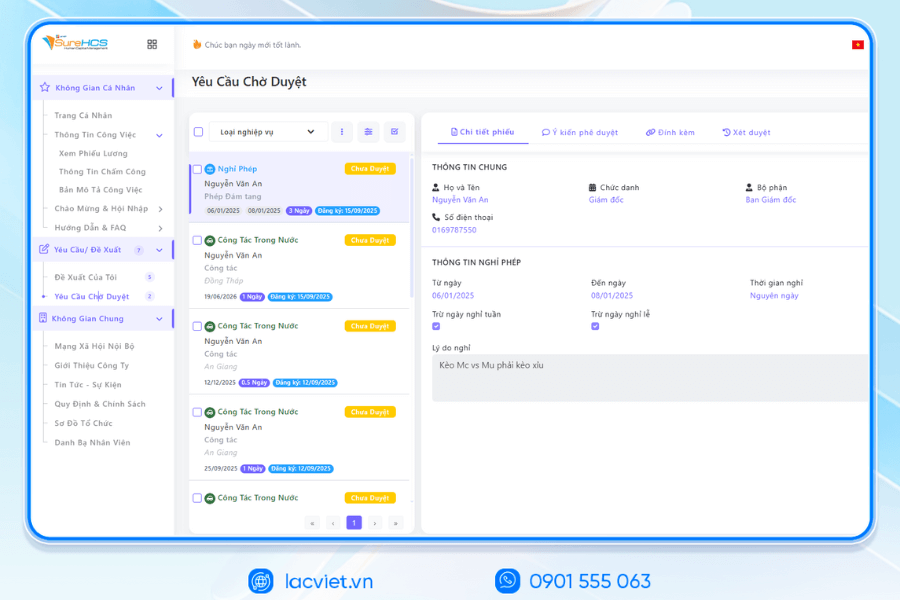
- Automation approve leave, OT, appointment, notification of personnel.
- Sync your data between recruitment – onboarding – profile – attendance – payroll.
- The maximum reduction in dependence on Excel file or process of oral transmission.
- Create report to the accurate real-time.
The results not only “faster”, but also is to do exactly, transparent, scalable, especially important with business is growing.
3.4. Make the experience better employee, increase cohesion
A process multiplied by the lack of consistency makes employees feel a lack of transparency: when it is browser allows fast, sometimes slow; at times get payroll right term, but many times is wrong; or the assessment process is not clear.
When businesses apply standard procedures:
- Response time, approvals is shortened.
- All personnel procedures are clearly specified.
- Staff know who's in charge, step by step.
- The policy is communicated consistency between the parts.
Experience better employee synonymous with a reduction in the rate of absenteeism, improve the level of satisfaction and increased cohesion in the organization.
3.5. Create platform to scale business
Business as big, the number of business, HR and more. If there is no standard procedure from the beginning, each time opening a new branch or recruit more personnel, enterprises have to “patch” or fix the process.
Standardized processes right from the start help:
- Easy cloning process to the branch.
- Reduce the cost of training new personnel.
- Ensure business operating system, the most measurable.
Here are important factors help businesses grow sustainably.
4. The steps in the process of personnel management standard today
Các bước trong quy trình quản lý nhân sự chuẩn hiện nay
Bước 1. Xác định nhu cầu nhân sự
The first step in the process of personnel management is to clearly define staffing needs of the business. This is not simply count the number of empty position, but also need thorough analysis of the volume of work, strategy development, financial capability of the organization.
For example, a company is expanding into new markets will need to add more business team and customer care, while a manufacturing business may need to engineer technology to enhance productivity. The accurate forecast staffing needs help businesses avoid redundancy of the – wasting the cost, or lack of people – disrupting activity.
Bước 2. Tuyển dụng hội nhập nhân viên mới
After identifying the needs, the business entered the stage of recruiting integration (onboarding). This is the link key by hiring the right people, the right time will decide directly to the quality of personnel input.
A flow chart hr management at this stage often include: posting, recruitment, screening resumes, interviews, reviews, negotiation and signing of the contract. However, many businesses often overlook stitched integration makes new employees hard and quickly leave the company.
Bước 3. Đào tạo phát triển
Don't stop at recruitment, enterprises need to build a process, training and development of staff to ensure the team is always ready to meet the job requirements, to adapt to change.
Training can include the orientation program for new staff, courses, advanced professional, or soft skills such as time management, communication, leadership. In parallel, staff development toward preparing for staff roadmap profession, for example: a business has the potential to be oriented to become the group leader.
When implementing hr processes in the enterprise, the application of technologies such as learning management system (LMS) or software HRM integrated training, will help enterprises save time, track the results and the learning for each employee.
Bước 4. Quản lý hiệu suất làm việc
Performance management is one of the important pillars of process management, personnel management, because it helps businesses measure the exact level of contribution of each individual and the collective. Instead of reviews based on sentiment, many businesses today are application-specific metrics such as Key Performance Indicators (KPIS) or OKR (Objectives and Key Results).
For example, with a sales staff, KPI can be sales by month, while the OKR can be the goal of expanding the new market. When the review process transparent, with clear criteria, staff will understand they need to gain nothing from it to focus more on work.
Bước 5. Chính sách lương, thưởng, phúc lợi
Salary, bonus and benefits is the key element to keep motivate employees. A remuneration policy justified not only need to comply with labor laws, but also to ensure competitive compared to the market.
For example, in addition to the basic salary, the business can replenish the account benefits such as health insurance, subsidies for travel or work mode, flexible. This is the way that many companies in technology are applied to make a difference in attract talent.
Bước 6. Quản lý quan hệ lao động
Any business will also have at rise to a conflict or dispute between employee and the company. Therefore, the construction management process labor relations is essential to maintain the working environment is stable.
This content typically includes: set up the internal labor regulations, mechanisms to handle complaints and disciplinary process fair, transparent. For example, when employees reflect on working conditions, businesses need to have a channel for receiving handle clear instead of ignored.
Bước 7. Quy trình nghỉ việc bàn giao
Many businesses often focus on recruitment, but lack of investment for the period of stay of the employee. In fact, this is also an important step in the way hr processes in the enterprise.
A process to stay in the post include: receiving applications for stay approved, handing work, payment of salary and bonus in – insurance and finally the interview just to collect feedback. When made transparent, this process will minimize the risk of loss of information, ensure the work is resumed, at the same time maintain the professional image of the business in the eyes of former employees.
5. How build process, personnel management, standardized for business
Build a process, personnel management, it not only helps the business operate smoothly but also to create a foundation to scale, reducing legal risks and improve performance internal. Here are the steps to deploy is in common use in the business are applying standardized operating data-driven.
Cách xây dựng quy trình quản lý nhân sự chuẩn hóa cho doanh nghiệp
Step 1. Determine target range
Businesses need to clearly define the target when the build process. Each organization will have different priorities: reduce the time of recruitment, optimal staffing costs, standardized attendance – payroll or advanced experience staff. The defined goals helps avoid the complex process excessive or omission of important.
Scope of the process also need to be clarified:
- Application process for the entire company or just one department?
- Apply for staff official or including seasonal collaborators?
- There are integrated with the software or still operated manually?
To clarify right from the start saves time ensure the process fits with the context of business.
Step 2. Collect process data current
In this step, business needs assessment survey, all hr activities are happening. Usually combined three methods:
- Interview stakeholders (HR, line managers, board of directors) to grasp the real situation, the bottlenecks often encountered.
- Collect materials are used as templates, checklists, internal regulations.
- Practical observations by staff and management manipulation to detect points of congestion (bottlenecks) or step excess.
The assessment of skills, the mood is primed to re-design process more efficient.
Step 3. Design flow charts, processes, personnel management
After understanding the situation, the next step is to draw a flow chart process of personnel management. This is a way to visualize the entire flow of work in each step, the person responsible for the control points of risk.
A flow chart effectiveness should be made clear:
- Start – end of the process.
- The processing steps in the correct order.
- The responsibilities of each position (HR, management, board of directors).
- The point of approval required (approval).
- The risk can happen, for example: lack of records, data discrepancies, payroll do not match.
Flow chart process not only helps HR easy to deploy but also create transparency for the entire business.
Step 4. Standardized issuance of process HR
When you have clear business need to transform into the document, standardize, including:
- SOP (Standard Operating Procedure): detailed description of each step.
- Checklist for every business to ensure no omissions.
- The form and documents attached.
- Ways of storing, updating hr data.
For small and medium businesses, the process helps to avoid the status of “dependent on the make”, to ensure stability when personnel change. With big business, standardization helps to reduce errors, increase uniformity between the branches.
Step 5. Technology application HRM in the process
This step is decisive long-term effectiveness of the entire process of personnel management. If the business only in the build process on paper without application of technology, HR still have to handle the craft, easy to errors difficult to control data.
Software HRM solve the core problem:
- Automate workflow, recruitment process, approve leave, browse table, payroll... is automated, up to 70% handcrafted.
- Data transparency, reduce risk, legal risk, all data is stored centrally, there is history trace and limit depends on the Excel file discrete.
- Increased processing speed According to the Deloitte Human Capital Trends 2024, 79% of businesses see automation HR is a top priority to enhance operational efficiency
- Optimal operating costs, Reduce time HR for job administrative and focus on strategic role, such as training and development.
- Advanced experience staff process more transparent, the information is updated automatically, employees actively lookup-day license, payroll, notifications instead of having to ask HR.
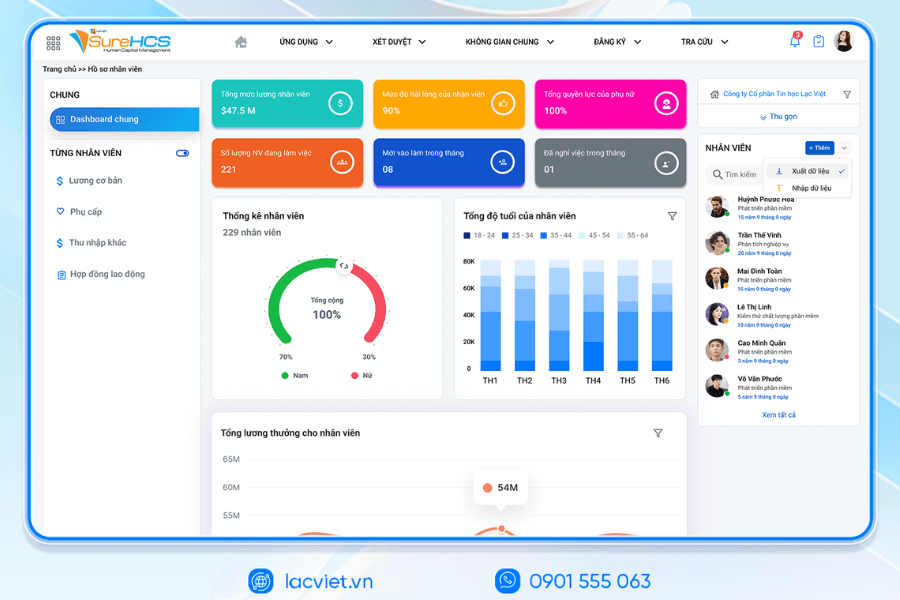
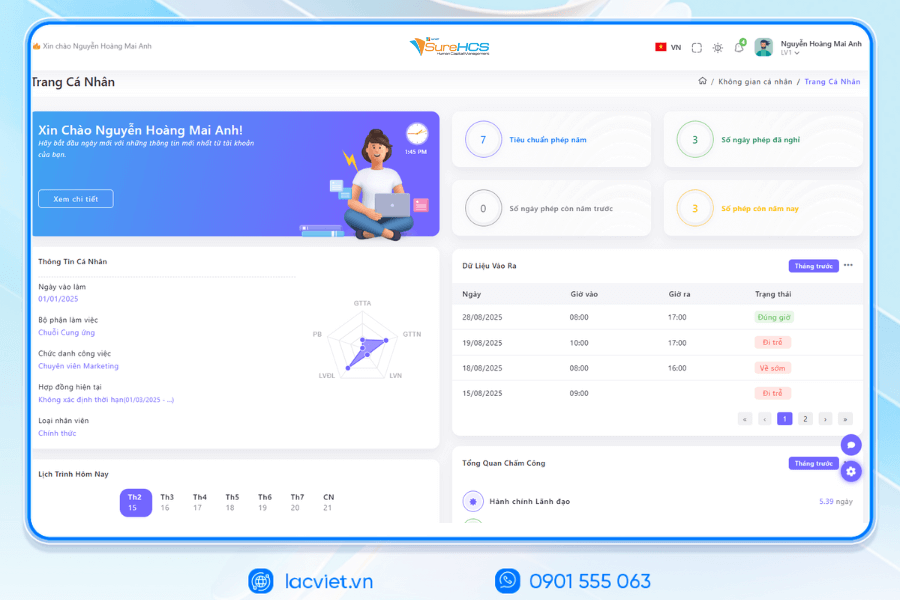
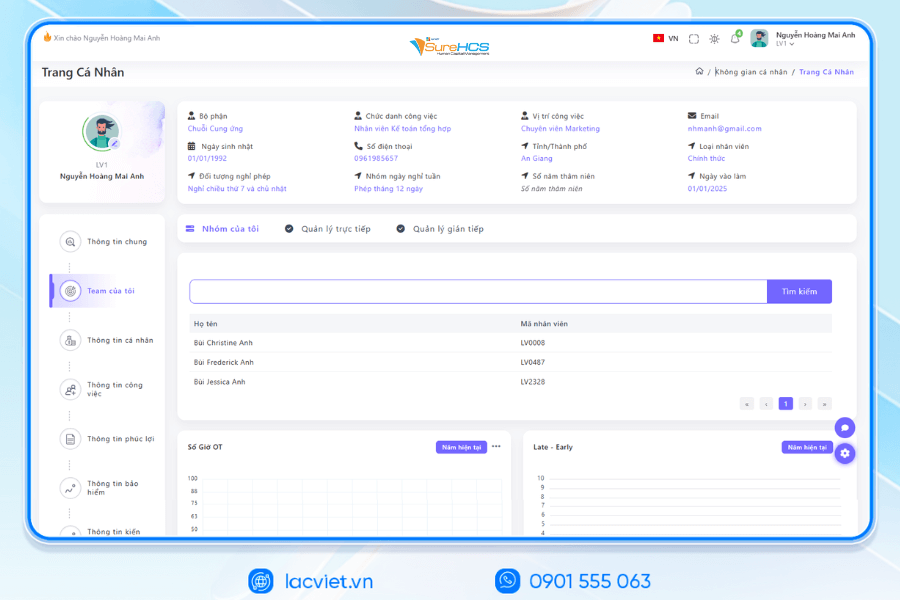
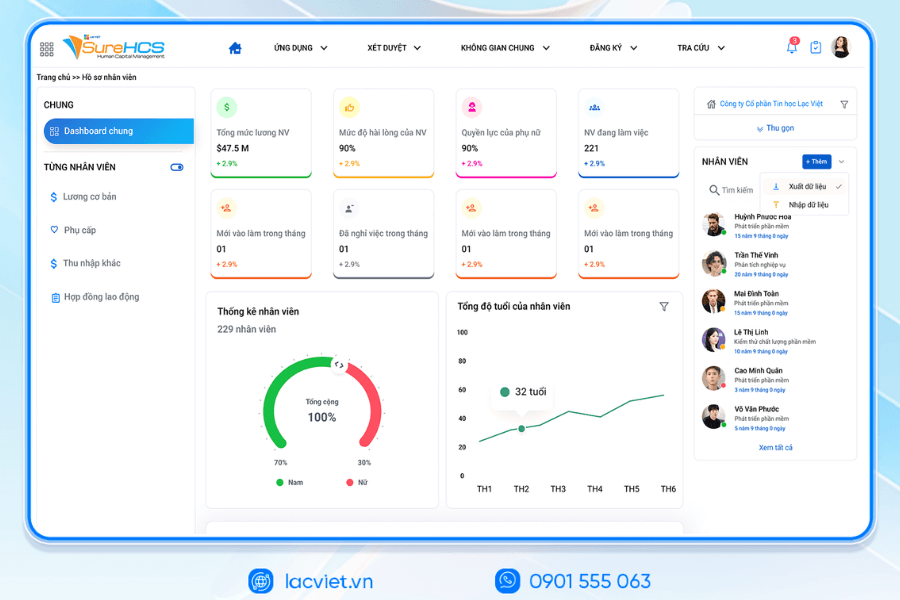
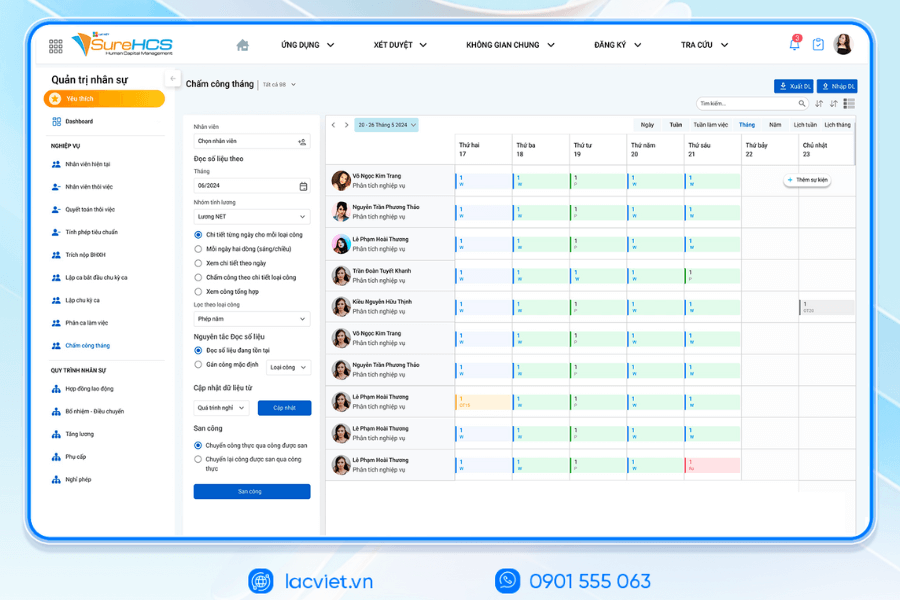
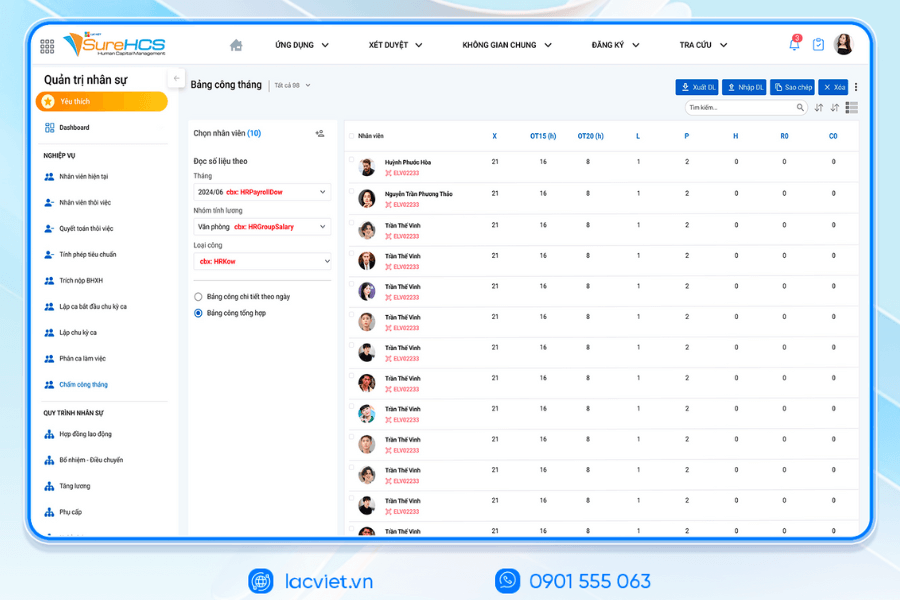
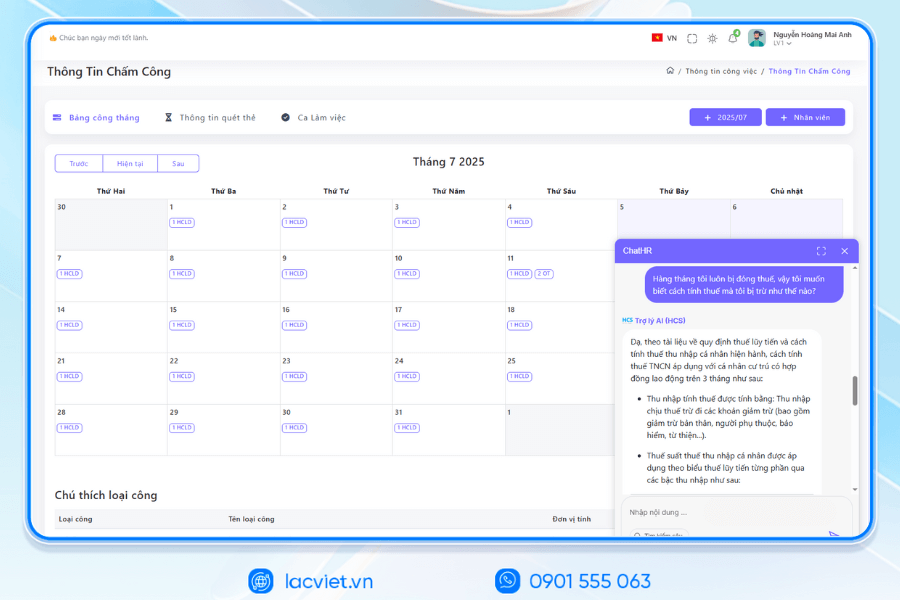
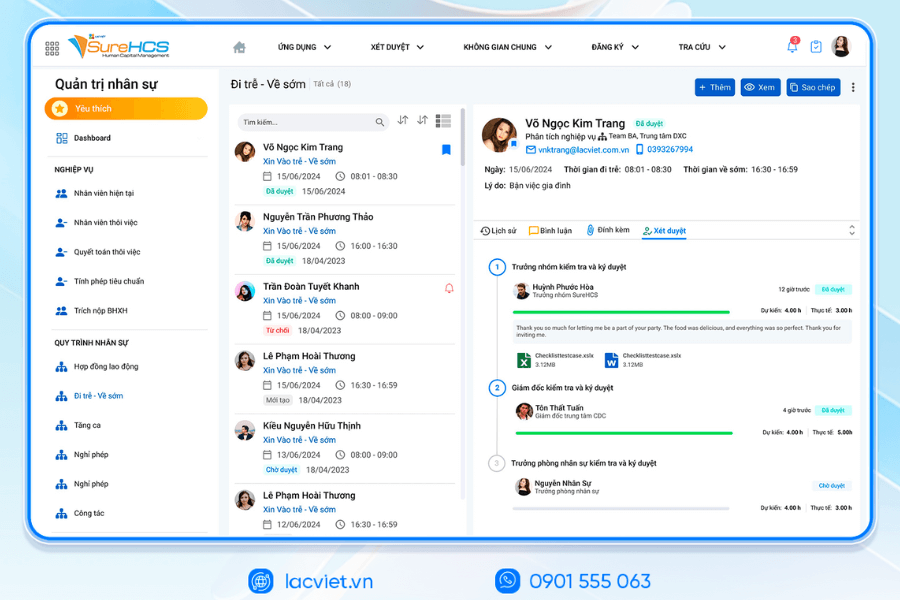
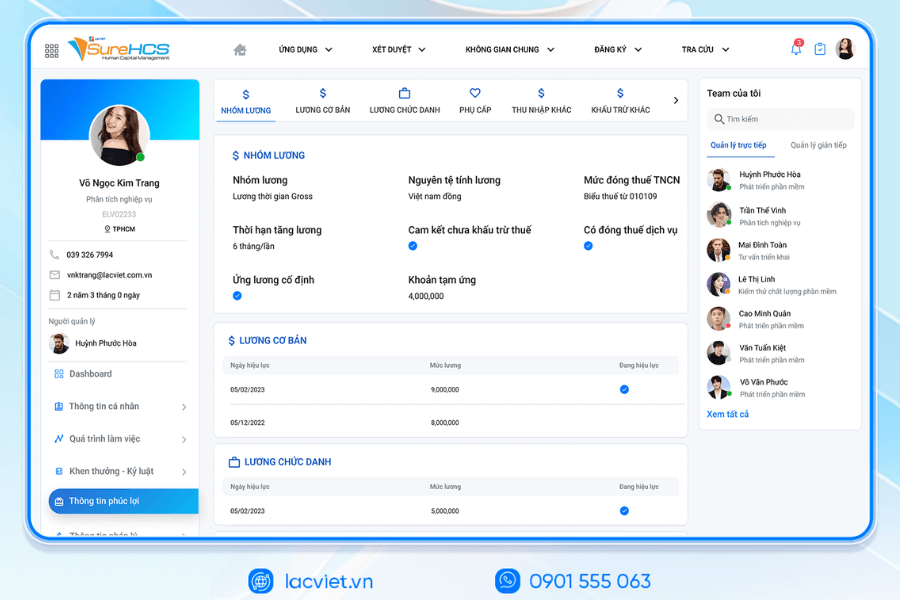
In the context of digitization, many businesses are moving from manual processes to the system of HRM (Human Resource Management) to optimize operation. The software hr management as SureHCS enables enterprises to digitize the whole process from recruitment, timekeeping, payroll, to management, benefits, performance reviews.
For example:
- Instead of entering data attendance Excelthe system will automatically record the working time by the timekeeper or mobile application.
- Payroll calculation process is automated based on data attendance systemcontract labor provisions on deductions from wages.
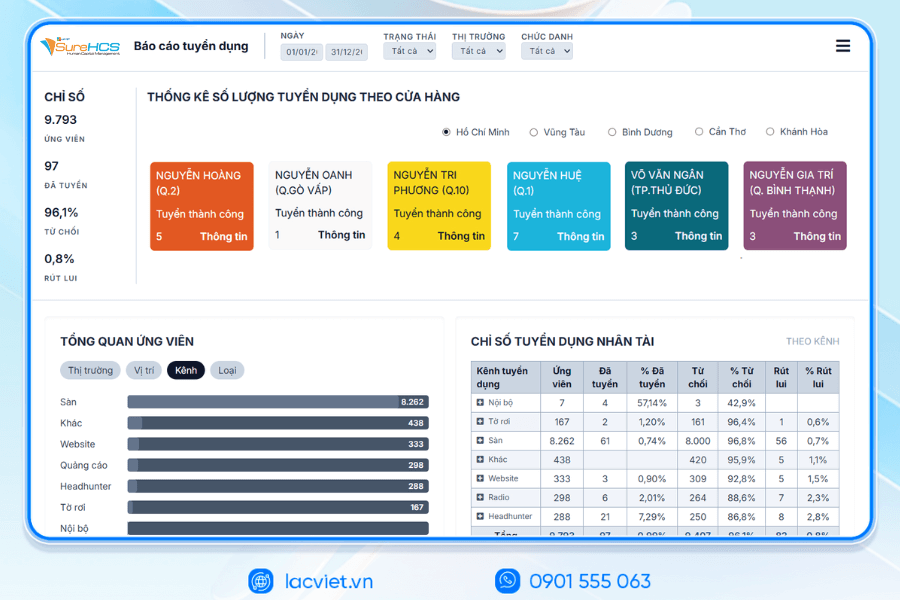
- HR departments can easily track visual reports about the rate of absenteeism, labour productivity, the cost of personnel in real time.
Step 6. Training – deploy – test for continuous improvement
A good process does not stop at the building that need to be trained, constant control:
- Internal training to ensure that all departments understand the correct application.
- Test in small range (pilot) to detect problems before deployment of the entire company.
- Periodic reviews by the month or quarter to adjust the process in accordance with the change of the organization.
- Integrated data feedback from staff and management to continuous improvement.
Maintaining improvements to help businesses ensure the process of hr management is always in accordance with the speed of development and fluctuations in hr.
6. Common mistakes when implementing hr processes
Although many businesses have started to standardize operation, but the deployment process, personnel management still often see the common mistakes which makes the system not effective as expected. Recognize correct these problems help business save cost, reduce risk and avoid re-structure multiple times.
Sai lầm thường gặp khi triển khai quy trình nhân sự
6.1 process, discrete, non-attached data
One of the biggest mistakes is the process built separation between each array as recruitment, timekeeping, payroll, personnel evaluation. When each department to use a tool or an Excel file private data is not contact information, caused many implications:
- Recruitment information not connected to profile new employees, HR must re-enter data.
- Attendance data is not in sync with payroll system, leading to deviations pay.
- The process of performance evaluation is not affiliated with the results of training, causing lack of transparency.
From an operational point of view, a process discrete that HR takes a lot of time investigating the cause of the defects, while the leaders did not have sufficient data to make decisions.
6.2 No flow chart process clearly
Many businesses have describe the process of writing, but no flow charts, processes, personnel management, intuitive. This makes new employees, management, even the HR difficult to understand the steps to be taken, who is responsible, when in need for approval.
Practical consequences, including:
- Each department understand a style lead to wrong treatment process.
- The step is omitted, especially in the business such as onboarding, contracting, payroll, discipline.
- Processing time stretching because don't know what is the next step.
Solution: each process, HR should be intuitive invoice form, flow charts, and easy to understand, there is for example illustrated and described the responsibilities each position.
6.3 depend too much into Excel and manipulate craft
Excel is a good tool for the small business or data little, but as the scale increases, the dependence on Excel cause many risks:
- File the wrong formula, causing the wrong salary.
- Staff must enter the data manually, easy to confuse or overlook.
- No history edit, hard to trace bugs.
- Data is dispersed, the new employee takeover difficult to understand file structure.
Error wage or miscalculated day allows all directly affect the experience, staff, and corporate reputation.
Solution: step by step transition to automation systems, data integration, especially the sensitive as timekeeping, and payroll.
6.4 system control – approval
A hr process efficiency doesn't just stop at describing practical steps that need control mechanisms approved clear. However, the common mistake is all information is HR and handling, sent via email, Zalo or papers, which leads to:
- Do not track is who browse, browse at any time.
- Confusion between the version record or dispatch.
- The process is interrupted when the browser absent.
- No history recorded for reference when there is a dispute.
Solution: build system approved, many levels have automatic notification and save the trace in full. This makes the process transparent, limiting the risk reduction depends on the person.
7. Quản trị nhân sự chuẩn với hệ thống Lạc Việt SureHCS HRM
In the process of building commissioning process management, personnel management, many businesses have trouble handling large amounts of data, ensuring accurate compliance with legal regulations. This is also the reason why increasingly more organizations choose the application of technology solutions to human resource management, rather than relying only on the method or Excel tradition.
Lac Viet SureHCS HRM is one of the software solutions, hr management comprehensive, get more business in Vietnam trusted. This system supports the construction business operational hr processes from recruitment, attendance – payroll, benefits manager to evaluate the performance and staff development.
The strong point of SureHCS HRM lies in the ability to automate flexible customization according to specific activities of each organization, at the same time comply with the legal norms, as well as the standards of modern management such as ISO.
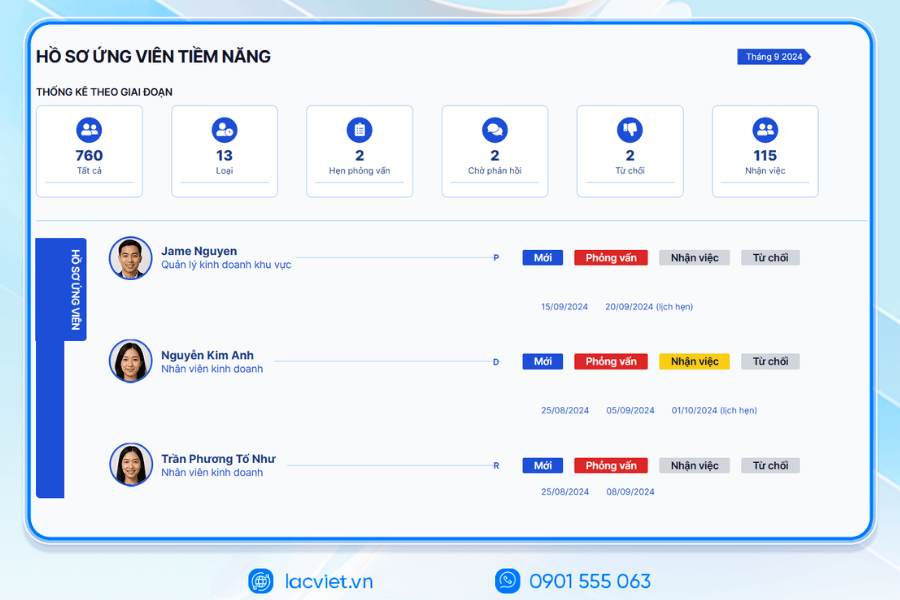
INTEGRATED AI ACCELERATED CONVERSION OF HUMAN RESOURCES MANAGEMENT
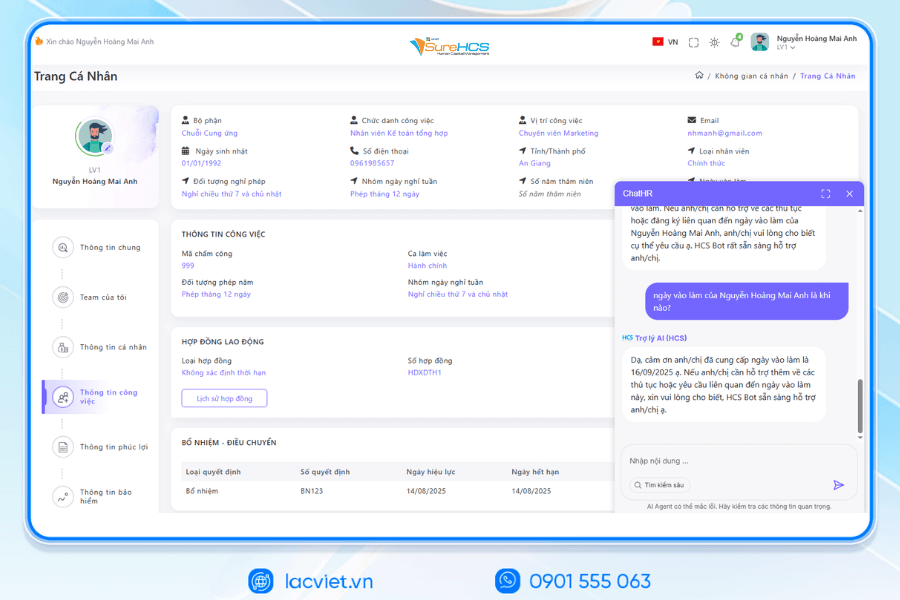
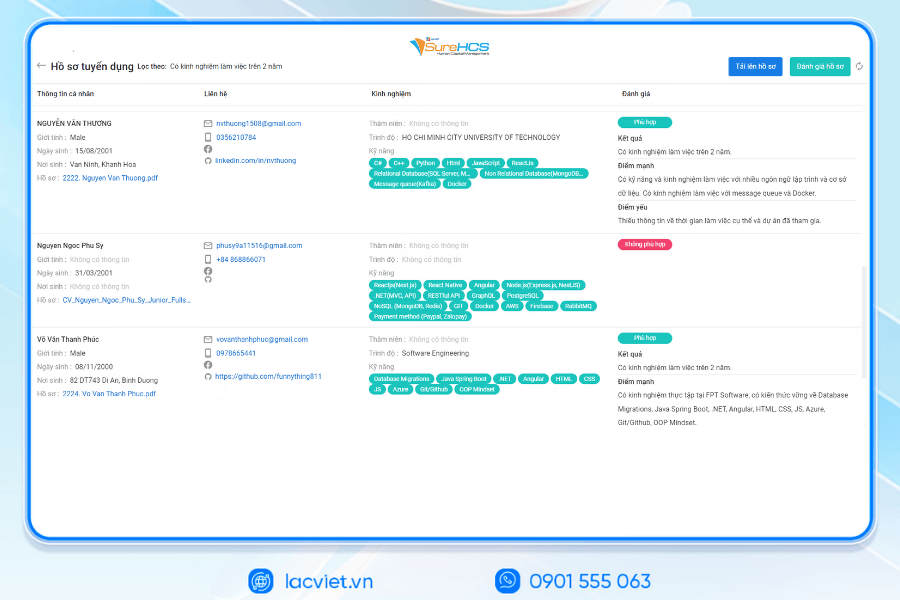
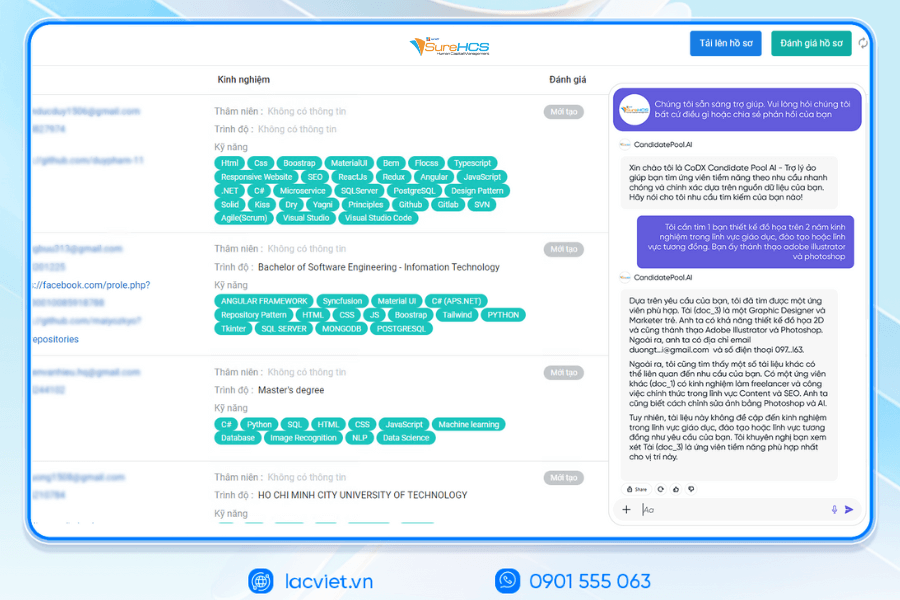
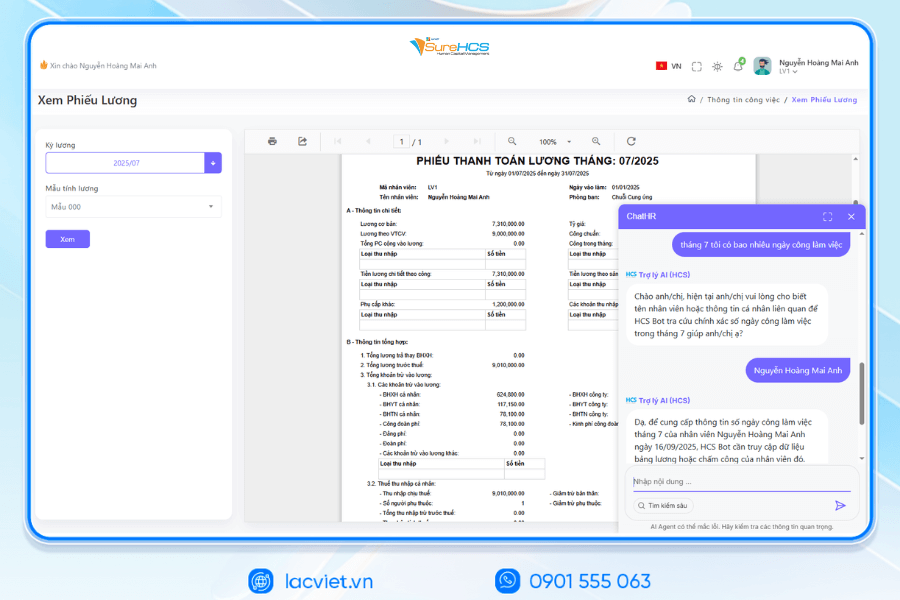
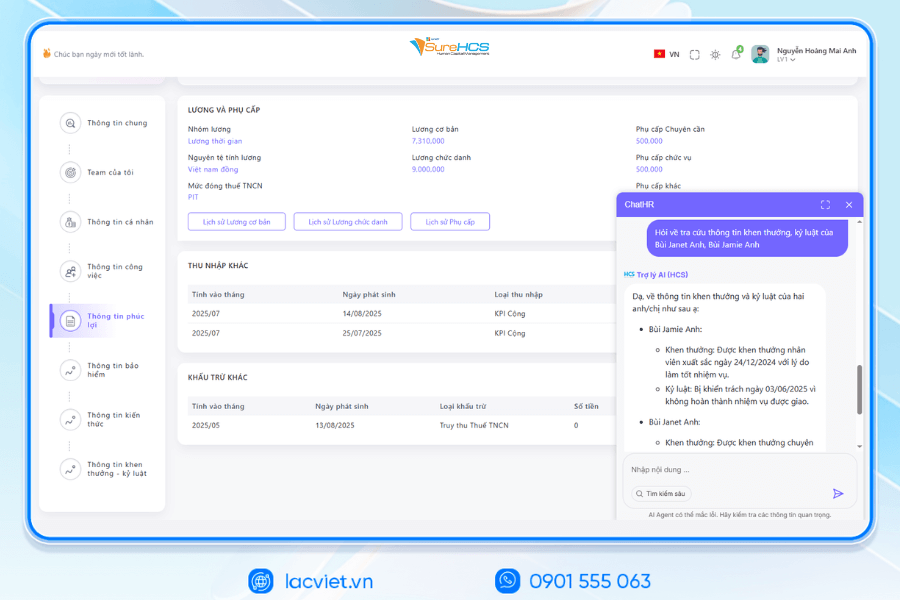
Lac Viet has officially launched The 3 AI assistant hr deeply integrated into the LV SureHCS including LV-AI.Docs, LV‑AI.Resume and LV‑AI.Help to automate the task administration, standardized data enhanced experience personnel
- LV‑AI.Docs: automatic dissection transfer data from documents such as CCCD, windows, SOCIAL insurance, by level of digital records, standardized
- LV‑AI.Resume: automatic dissection CV any format, analyst CV auto, construction, candidate profile, find people with the right criteria by prompt intelligent data mining candidate pool efficiency
- LV‑AI.Help: chatbot internal support, answer questions HR 24/7 access form process quick contextual user
TYPICAL CUSTOMERS DEPLOYING LV SUREHCS HRM
SureHCS are trusted and used by many large enterprises and leading corporations such as: Coca-Cola, Takashimaya, Textile SuccessfulPlastic Long Thanh Phu Hung Life, Airports of Vietnam (ACV)the business belonging to the SGCthe FDI enterprises in the fields of production, logistics, trade – in service.
- Coca-Cola Vietnam: System deployment LV SureHCS to digitize comprehensive human resource management group has standardized the data, the optimal operating HR according to international model.
- Textile company Success (TCM): Application LV SureHCS to manage hr, payroll, benefits, timekeeping and capacity profile for nearly 5,000 employees across 5 areas of activity – from textiles and fashion to real estate.
- Total company air Port, Vietnam (ACV): Choose to trust LV SureHCS to operate the system large-scale personnel with over 10,000 employees, 24 subdivisions, solved the problem of complex business of modeling state-owned companies.
SureHCS particularly suitable for:
- Large-scale enterprise, from 300 to 10,000 hr
- Corporations and enterprises multi-company, multi-branch
- FDI, manufacturing, factory, logistics, aviation should attendance – analysis ca – salary calculator complex
- Businesses are C&B peculiarities, need custom depth according to the actual operating
- Businesses are personnel management using Excel, many types of timekeeper, need automate the entire process
SIGN UP TO RECEIVE DEMO NOW
WHY BUSINESSES SHOULD CHOOSE TOUCH THE SUREHCS?
- Customized according to the actual business, no pressure mold as packaged software.
- Handle the personnel – salaries complex that many software HRM other does not respond.
- Deep understanding operated business English & FDI, ensure compliance with legal Vietnam (labour, SOCIAL insurance and personal income tax).
- Ecosystem integration strength: attendance – payroll – bank – SI – electronic contract.

See details, feature & get FREE Demo
CONTACT INFORMATION:
- Hotline: 0901 555 063
- Email: surehcs@lacviet.com.vn
- Website: https://lacviet.vn | www.surehcs.com
- Office address: 23 Nguyen Thi Huynh, Phu Nhuan, ho chi minh CITY.CITY
This solution not only helps to reduce the load administrative work for hr, but also bring practical benefits: save operating costs, enhance transparency, improve the experience of employees throughout the working life in business.
A process, personnel management, it not only is the platform for businesses to operate efficiently but also a lever to create long-term value: improve productivity, reduce errors, administrative, retain talent, build business image professional. Business as early applied, as quickly optimize cost, advanced experience staff.