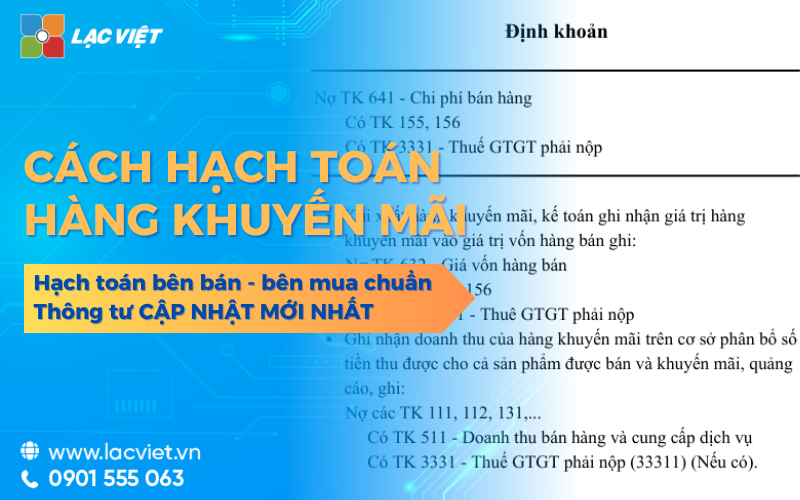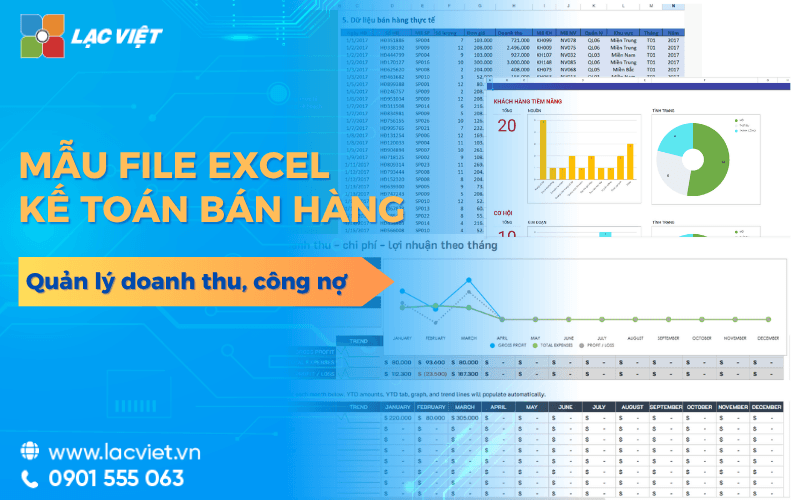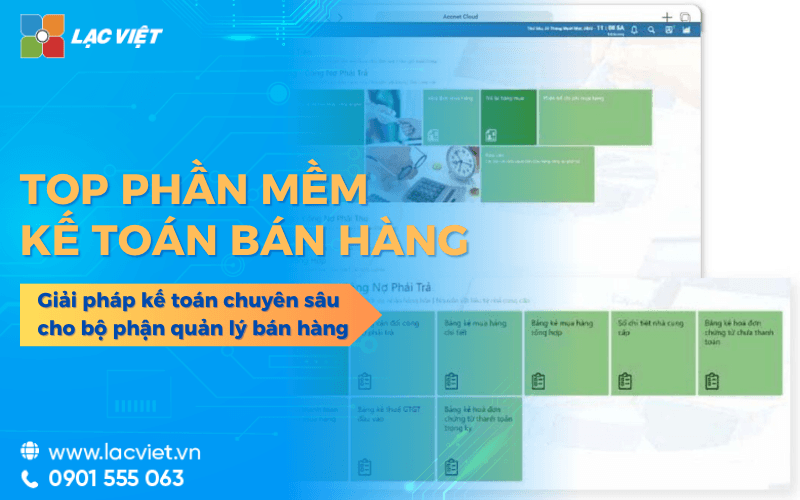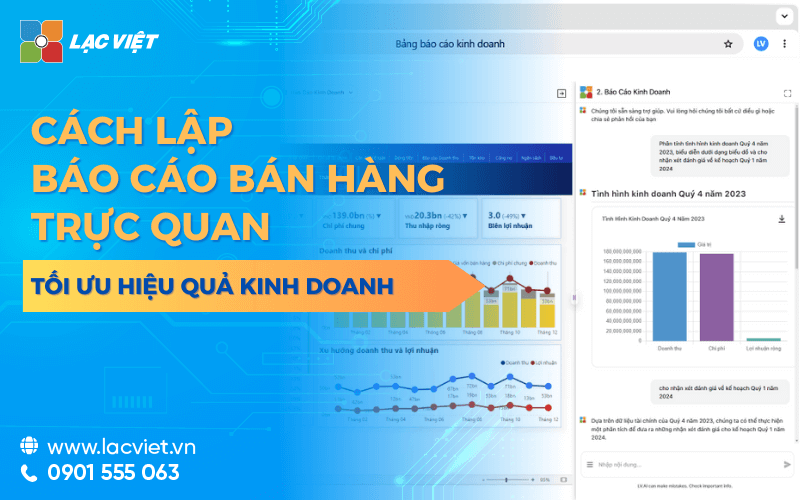

Kế toán doanh thu là nghiệp vụ kế toán ghi nhận và kiểm soát các khoản doanh thu phát sinh từ hoạt động bán hàng, cung ứng dịch vụ của doanh nghiệp. Công việc này đảm bảo doanh thu được hạch toán đúng thời điểm, đúng chuẩn mực, phản ánh chính xác kết quả kinh doanh. Đồng thời, kế toán doanh thu góp phần đảm bảo tính minh bạch số liệu tài chính, hỗ trợ công tác quản trị và tuân thủ nghĩa vụ thuế.
Many businesses today are still not clearly distinguish between revenue, other income and cash flow, the income from which to deviations in the determined profit potential risks reduce your tax governance. When the scale of operations expansion, business model increasingly diverse or boost converter numbers, requires control revenue transparency and consistency becomes more important.
Article below Lac Viet sẽ cùng doanh nghiệp làm rõ bản chất nghiệp vụ, các nguyên tắc ghi nhận theo chuẩn mực kế toán, cách triển khai trong thực tế và vai trò của nội dung này trong quản trị tài chính hiện đại, đồng thời phân tích việc ứng dụng hệ thống kế toán ERP nhằm nâng cao hiệu quả quản lý.
1. Kế toán doanh thu là gì? Vai trò và nguyên tắc cần nắm
1.1. Concept of accounting recognize revenue under accounting standards
Kế toán doanh thu là công việc ghi nhận, kiểm tra, phân loại, theo dõi các khoản doanh thu phát sinh từ hoạt động bán hàng, cung cấp dịch vụ và các hoạt động kinh doanh của doanh nghiệp. Tuy nhiên, kế toán doanh thu không đơn thuần là ghi nhận số tiền khách hàng thanh toán. Điểm quan trọng là xác định đúng thời điểm doanh thu được ghi nhận, giá trị doanh thu, các khoản giảm trừ liên quan.
Ví dụ, doanh nghiệp bán một lô hàng trị giá 100 triệu đồng cho khách hàng nhưng chưa thu tiền. Nếu giao dịch đã đáp ứng đầy đủ điều kiện ghi nhận doanh thu, kế toán vẫn ghi nhận doanh thu và đồng thời theo dõi khoản phải thu khách hàng. Ngược lại, tiền khách hàng ứng trước chưa đồng nghĩa doanh nghiệp đã có thể ghi nhận toàn bộ số tiền đó vào doanh thu.
Việc phân biệt rõ doanh thu – tiền thu được – công nợ phải thu đặc biệt quan trọng với kế toán trưởng, bởi nếu ghi nhận sai thời điểm, doanh thu lợi nhuận trên báo cáo tài chính có thể bị phản ánh không đúng kỳ.
Từ năm 2026, doanh nghiệp cần lưu ý Circular 99/2025/TT-BTC về chế độ kế toán doanh nghiệp. Thông tư có hiệu lực từ ngày 01/01/2026 và áp dụng cho năm tài chính bắt đầu từ hoặc sau ngày này, thay thế Thông tư 200/2014/TT-BTC.
Many businesses, especially in the stage of standardized accounting system or conversion of, often confuse revenue – cash flow earned. So, in accounting need to distinguish three basic concepts the following:
| Criteria | Revenue | Other income | Cash flow earned |
| Nature | Value of goods and services already delivered, eligibility recorded according to accounting standards. | Revenues increase equity, but does not come from the main business activities. | Actual amount (cash/transfer) take into account of the business. |
| Base notes | Accrual basis: Record when obliged to complete the sale (does not depend've collect money or not). | Recorded when the transaction in addition to its core activity arises, there is evidence for sure. | Cash basis: Only recorded when the money is actually in the fund or bank account. |
| Reflect | The scale and efficiency of operations core business (Core Business). | The financial volatility from casual activities, not stable. | Liquidity, health cash flow and capacity instant payments. |
| For example |
|
|
|
In summary, accounting, revenue recognition not only serve bookkeeping but also the administration tool important, to help businesses properly reflect the business results as well as support the correct decision. Therefore, understanding properly apply accounting standards in actual operation is required pivotal for the organizations and enterprises.
1.2 Kế toán doanh thu có vai trò gì đối với doanh nghiệp?
Doanh thu là một trong những chỉ tiêu đầu tiên được ban lãnh đạo quan tâm khi đánh giá hoạt động kinh doanh, nhưng doanh thu cao chưa đồng nghĩa với doanh nghiệp kinh doanh hiệu quả. Dữ liệu doanh thu chỉ thực sự có giá trị khi được ghi nhận chính xác và kết hợp với giá vốn, lợi nhuận, công nợ, dòng tiền.
Đối với doanh nghiệp, công tác kế toán doanh thu tốt giúp:
- Phản ánh chính xác kết quả kinh doanh: Doanh thu được ghi nhận đúng kỳ giúp báo cáo tài chính phản ánh sát hơn tình hình hoạt động thực tế.
- Kiểm soát công nợ: Kế toán có thể xác định giao dịch nào đã bán nhưng chưa thu tiền, khách hàng nào đang có dư nợ và thời gian thu hồi.
- Kiểm soát doanh thu theo nhiều chiều: Doanh nghiệp có thể phân tích doanh thu theo sản phẩm, khách hàng, chi nhánh, khu vực hoặc từng nhóm hoạt động.
- Hỗ trợ quản trị, ra quyết định: Khi dữ liệu doanh thu được cập nhật đầy đủ, ban lãnh đạo có cơ sở đánh giá sản phẩm nào đang tăng trưởng, nhóm khách hàng nào mang lại giá trị cao, hoạt động nào cần điều chỉnh.
- Giảm rủi ro sai lệch khi lập báo cáo: Việc đối chiếu doanh thu với hóa đơn, công nợ, tiền thu và các khoản giảm trừ giúp phát hiện sai sót trước khi khóa sổ.
Đây cũng là lý do Thông tư 99/2025/TT-BTC đặt trọng tâm vào việc doanh nghiệp xây dựng quy chế hạch toán kế toán nội bộ, tăng cường khả năng kiểm soát, đối chiếu dữ liệu.
2. Job description accounting revenue in business
The last recorded, as well as revenue management is hitched critical of the financial system, mounted directly with sales, financial statements, liabilities and cash flows. Properly understand the business helps the business organization, accounting, it, limit deviations figures enhance effective governance decisions.
2.1. The main task of accounting for revenues
Accounting responsible for the beginning of the following with the goal of ensuring revenue is recorded properly, fully and timely. From that provides accurate data for management decision-making:
- Track contract economic – order – bill of sale: this work consists of checking the sales contract, order confirmation, delivery conditions, payment and invoice output. This is the first step to ensure revenue is recognized in accordance with accounting.
- Revenue recognition & tracking receivables according to each customer contract: is done when business obliged to complete the delivery/service, have the right to economic benefits. Through which control the public debt, payment term, as well as manage cash flow effectively.
- Reconcile revenue to the business department, sales: Help secure data recorded properly reflect the contract and the status of delivery, providing actual services. Constant collaboration between business – accounting help early detection of errors, limiting the risk report as well as enhance effective coordination internal.
- Reporting, recurring revenue service administration & settlements: is a key task, provide data for the leadership evaluate the effectiveness, sales support, financial department to control cash flows – public debt to ensure the tax declaration regulations, and as a basis for analysis in decision management.
2.2. Skills & competencies required of accounting revenue
To effectively implement the tasks mentioned above, accounting, revenue recognition, the need to possess the following skills:
- Understand the regulatory accounting – tax related to sales: the accountant should make sure time, conditions recorded how to handle the account adjusted revenue under accounting standards and tax rules. Thereby limiting the risks of false financial statements, tax arrears in the audit process.
- Skills analysis – aggregate financial data: accounting must handle large amounts of data from many different sales channel. Skills analysis helps detect trends, revenue, deviations from the plan as well as the cause fluctuations in the data.
- Be careful – accurate – compliant process: revenue is the data input of many financial reports important. The flaws though small in revenue recognition can lead to reported profitability false, influence the decision of management.
- Ability to coordinate well with the parts related: is requesting key in revenue management. Effective coordination with the sales department, stock and debt collection help timely updates of the transaction, confirm the delivery, as well as control the flow of money. Thereby improving the accuracy of data, shorten the processing time business.
Job description accounting recognize revenue to help businesses standardize processes, compliance with accounting – tax enhance the reliability of data. This is the foundation support and coordinate internal decision-making governance effective.
3. The type of revenue in the business today
Correct classification of revenue not only to meet the requirements accounting – tax but also help enterprises to clearly identify the sources of value creation, sustainable level of each activity. If not, separate the type of revenue, the analysis of business performance and evaluate core competencies will be more prone to false.

3.1. Sales & service provider
This is a source of revenue to the core, reflecting direct energy business your primary business. Sales revenue, service provider arising from the activities often repeat associated with business model mainstream. Specific:
- Commercial enterprise: revenue arising from the purchase of goods and resell to customers. Sales value, reflecting market size, sales effectiveness.
- Manufacturing business: revenue coming from the sale of finished products or semi-products after the manufacturing process. This is the basis to evaluate production performance, the ability to compete on price.
- Business services: revenue from providing services under the contract, usually associated with implementation progress, or duration of service provision.
Sales revenue, service providers is the most important indicator to assess the health business long-term. Leaders often rely on this revenue to:
- Construction business plan budget year.
- Evaluate the effectiveness of each product and service market.
- Strategic decision price, open, wide or narrow operation.
With respect to the organizations and enterprises are to find out information about accounting, revenue tracking details sales revenue by product, contract, customer or sales channel help detect early trends, growth or decline, from which adjust strategy timely instead of just looking at total sales final.
3.2. Revenue financing activities
Revenue financial operations is the revenue arising from the use of capital as well as financial activities, not directly associated with the main business activities. This group includes:
- Interest on bank deposits, interest-free loans.
- Interest rate difference.
- Income from financial investments such as dividends, profits are divided.
Revenue financing activities reflects the efficient capital management, financial policies of the business. A business has cash flow idle used reasonable will create additional sources of finance to contribute to improve overall profitability.
However, the financial turnover does not reflect the capacity of the core business. If the proportion of fiscal revenue increase in the sales revenue does not increase, respectively, leaders need to review the operational efficiency of the business.
Thus, when accounting and analysis, accounting need to track private sales, financial help businesses:
- Properly assess efficient use of capital.
- To avoid confusion between profitable growth of major business growth due to financial factors.
- Provide accurate information for decision-making, investment and risk management.
3.3. Other income
Other income is the income does not arise often, not of the main business activities or financing activities. Common examples include:
- Proceeds from liquidation, sale of fixed assets.
- Collection of fines for breach of contract, amount of compensation.
- Revenues and other abnormalities.
In fact, many business risks as noted mistakenly other income of the sales revenue, leads to deviations revenue targets and “beautiful” business results in a way not sustainable. This is especially risky when businesses work with banks, investors, or in the u.s. audit, tax inspectors.
From the perspective of management, other income should be:
- Recorded true nature, clearly separated;
- Just see the factors that support short-term profits, not used as a basis for evaluating business performance long-term.
With respect to the organizations and enterprises are to find out information about accounting for revenues, the understanding and classification of true income other help avoid the wrong decision, such as business expansion based on extraordinary profits do not repeat.
4. Principles of revenue recognition under accounting regulations
Many false statements, tax risk and audit doesn't come from the wrong account, that due to the recognition of revenue at the wrong time or in the wrong nature. Therefore, the master principle of revenue recognition is required, particularly when the scale as well as the level of complexity of transactions is increasing.
According to the accounting Standards in Vietnam VAS 14 – the Ministry of Finance, revenue is recorded only when fully meet the conditions to reflect true economic value actually incurred.

4.1. Conditions of revenue recognition according to VAS
The conditions for revenue recognition according to the VAS as a “safety filter”, help businesses avoid recognition of revenue too soon or don't have the ability to recover. Specific:
- Business has transferred the risk & benefits associated with goods or services for buyers: News no longer be responsible for the goods or service results. This condition, in order to avoid recognition of revenue too soon when the goods remaining in the warehouse or services unfinished, from which ensure business results reflected properly according to each states.
- Revenue is determined with relative certainty: revenue is recorded only when the transaction value has been clearly defined, often expressed through contracts, orders or invoices. If the sale price also depends on the conditions uncertain, businesses need to be cautious when recorded.
- Business has the possibility of obtaining economic benefits from the transaction: The customer can afford to pay, do not exist dispute key. This condition aims to restrict sales “virtual”, to avoid high profits on the books but not the money is collected, cause weight loss for cash flow as well as risk-adjusted financial statements in audit, tax inspectors.
4.2. The time of recognition of revenue – corporate problems or wrong
In fact, consulting and commissioning, it is the content that a lot of businesses are adopting not true, especially medium enterprises/small or new organizations standardized accounting system. The most common mistake is to confuse the time of invoice, the time of revenue recognition. Specifically, many businesses said that:
- There are bills, then revenue recognition;
- No bill has yet to be recorded in revenue.
The way to understand this is not entirely true according to accounting standards.
According to VAS, revenue is recorded when economic transactions have completed, in essence, that is, when the business has delivered the big risks, benefits. There is the possibility of obtaining economic benefits, not absolute dependence on the time of invoice.
Illustrative examples: Business invoice at the end of the month to keep up with the progress of the contract, but the actual goods have not been delivered to the customer. In this case, although there was bill, businesses that are not eligible revenue recognition under accounting standards.
On the contrary, there are cases where businesses have to hand over the goods, the customer has acceptance but the bill was deferred to the states after. When that revenue should still be recorded properly states arose, intended to accurately reflect the business results.
The actual value of the recognition of the right time:
- Help the financial statements properly reflect the business performance in each period.
- Avoid bad profits “leap” or “drop unusual” between the states.
- Reduce the risk of tax authorities suspect adjusted revenue for the optimal tax.
- Create platform reliable data for analysis, management and decision-making.
According to the analysis of the audit unit, errors in revenue recognition is one of the most common causes leading to adjusted financial report after the audit, especially in the business has built process control revenue tightly.
5. Các nghiệp vụ hạch toán kế toán doanh thu thường gặp
Trong thực tế, sai sót về doanh thu thường không nằm ở việc kế toán “không biết định khoản”, mà ở việc xác định sai bản chất giao dịch, thời điểm ghi nhận hoặc xử lý chưa đúng các khoản giảm trừ. Từ năm tài chính 2026, doanh nghiệp áp dụng Thông tư 99/2025/TT-BTC cần đặc biệt lưu ý quy định mới về TK 511 và TK 521. Theo hướng dẫn, TK 511 phản ánh doanh thu bán hàng và cung cấp dịch vụ trong kỳ; các khoản chiết khấu thương mại, giảm giá hàng bán, hàng bán bị trả lại được phản ánh vào TK 521.
Dưới đây là các nghiệp vụ phổ biến mà kế toán thường xuyên phải xử lý.
5.1. Hạch toán doanh thu bán hàng thu tiền ngay
Khi doanh nghiệp bán sản phẩm, hàng hóa hoặc cung cấp dịch vụ và khách hàng thanh toán ngay bằng tiền mặt hoặc chuyển khoản, kế toán ghi nhận doanh thu đồng thời với khoản tiền thu được.
| Case | Accounting | Note |
| Bán hàng, cung cấp dịch vụ thu tiền mặt | Nợ TK 111: Tổng giá thanh toán
Có TK 511: Giá bán chưa có thuế Có TK 333: Thuế và các khoản phải nộp Nhà nước (nếu có) |
Doanh thu ghi nhận theo giá bán chưa có thuế gián thu khi thuế được tách riêng ngay tại thời điểm giao dịch. |
| Bán hàng, cung cấp dịch vụ thu qua ngân hàng | Nợ TK 112: Tổng giá thanh toán
Có TK 511: Giá bán chưa có thuế Có TK 333: Thuế và các khoản phải nộp Nhà nước (nếu có) |
Đối chiếu số tiền trên chứng từ ngân hàng với hóa đơn và chứng từ bán hàng. |
Theo Thông tư 99/2025/TT-BTC, khi bán hàng hoặc cung cấp dịch vụ thu tiền ngay, doanh nghiệp phản ánh tổng giá thanh toán vào TK 111/112, ghi Có TK 511 cùng TK 333 nếu có thuế gián thu.
Đồng thời, nếu hàng hóa xuất kho thuộc đối tượng tính giá vốn, cần ghi nhận giá vốn riêng:
| Case | Accounting | Note |
| Xuất kho hàng hóa, thành phẩm đã bán | Debt TK 632: cost of goods sold
Có TK 155, 156: Thành phẩm, hàng hóa |
Cần căn cứ phương pháp tính giá xuất kho, số lượng hàng thực tế đã bán. |
5.2. Hạch toán doanh thu bán hàng chưa thu tiền
Đây là nghiệp vụ rất dễ bị nhầm giữa doanh thu và dòng tiền. Khi doanh nghiệp bán hàng cho khách hàng theo phương thức bán chịu, giao dịch đã đủ điều kiện ghi nhận doanh thu, kế toán ghi nhận doanh thu đồng thời phát sinh khoản phải thu.
| Case | Accounting | Note |
| Bán hàng chưa thu tiền | Nợ TK 131: Tổng giá thanh toán
Có TK 511: Giá bán chưa có thuế Có TK 333: Thuế và các khoản phải nộp Nhà nước (nếu có) |
Không cần chờ khách hàng thanh toán mới ghi nhận doanh thu nếu giao dịch đã đáp ứng điều kiện ghi nhận. |
| Khách hàng thanh toán công nợ | Debt TK 111/112
Have TK 131 |
Đây là nghiệp vụ thu hồi công nợ, không ghi nhận thêm doanh thu. |
Thông tư 99 quy định trường hợp bán hàng, cung cấp dịch vụ chưa thu tiền ngay thì doanh nghiệp ghi nhận khoản phải thu vào TK 131 và đồng thời ghi nhận doanh thu, thuế liên quan.
5.3. Hạch toán doanh thu cung cấp dịch vụ
Đối với dịch vụ, kế toán cần quan tâm không chỉ đến hóa đơn mà còn đến mức độ hoàn thành của dịch vụ. Theo Thông tư 99, doanh nghiệp chỉ ghi nhận doanh thu khi xác định được tương đối chắc chắn doanh thu, có khả năng thu được lợi ích kinh tế, xác định được phần công việc đã hoàn thành và các chi phí liên quan.
| Case | Accounting | Note |
| Dịch vụ hoàn thành, thu tiền ngay | Nợ TK 111/112: Tổng giá thanh toán
Có TK 511: Doanh thu chưa thuế Có TK 333: Thuế phải nộp (nếu có) |
Cần có hồ sơ chứng minh việc hoàn thành dịch vụ theo hợp đồng. |
| Dịch vụ hoàn thành, chưa thu tiền | Nợ TK 131: Tổng giá thanh toán
Có TK 511: Doanh thu chưa thuế Có TK 333: Thuế phải nộp (nếu có) |
Không nên ghi nhận toàn bộ giá trị hợp đồng nếu phần dịch vụ tương ứng chưa hoàn thành. |
5.4. Hạch toán hàng bán bị trả lại
Hàng bán bị trả lại là một trong ba khoản được phản ánh vào TK 521 theo chế độ kế toán hiện hành, cùng với chiết khấu thương mại và giảm giá hàng bán.
| Case | Accounting | Note |
| Khách hàng trả lại hàng đã mua | Nợ TK 521: Giá trị hàng bán bị trả lại
Nợ TK 333: Thuế liên quan (nếu có) Có TK 131/111/112 |
Cần kiểm tra nguyên nhân trả hàng, chứng từ, xử lý hóa đơn theo quy định. |
| Nhập lại hàng bị trả lại | Nợ TK 155/156: Giá trị hàng nhập lại
Có TK 632: Giá vốn hàng bán |
Chỉ ghi nhận khi hàng thực tế được nhập lại và doanh nghiệp tiếp tục quản lý hàng hóa. |
Cuối kỳ, khoản hàng bán bị trả lại được kết chuyển để xác định doanh thu thuần.
5.5. Hạch toán chiết khấu thương mại
Chiết khấu thương mại là khoản giảm giá dành cho khách hàng dựa trên điều kiện mua hàng, thường được xác định theo sản lượng hoặc doanh số. Điểm kế toán cần chú ý là thời điểm xác định được khoản chiết khấu.
| Case | Accounting | Note |
| Chiết khấu thương mại đã thể hiện ngay trên hóa đơn | Ghi nhận doanh thu theo giá đã trừ chiết khấu | Không phản ánh riêng khoản chiết khấu trên TK 521 nếu doanh thu đã được ghi nhận theo giá thuần. |
| Chiết khấu được xác định sau khi khách hàng đạt điều kiện | Debt TK 521
Nợ TK 333 (nếu có) Có TK 131/111/112 |
Cần xác định đúng kỳ và căn cứ xác định mức chiết khấu. |
Thông tư 99 quy định nếu chiết khấu thương mại đã được thể hiện ngay trên hóa đơn thì doanh thu được ghi nhận theo giá đã trừ chiết khấu; nếu chưa xác định được khoản chiết khấu tại thời điểm bán thì doanh thu có thể được ghi nhận theo giá chưa trừ khoản này và xử lý khi đủ điều kiện.
5.6. Hạch toán giảm giá hàng bán
Giảm giá hàng bán thường phát sinh khi sản phẩm, hàng hóa không đáp ứng đầy đủ yêu cầu về chất lượng, quy cách hoặc các điều kiện thương mại đã thỏa thuận.
| Case | Accounting | Note |
| Giảm giá hàng bán cho khách hàng | Nợ TK 521: Khoản giảm giá
Nợ TK 333: Thuế liên quan (nếu có) Có TK 131/111/112 |
Cần có căn cứ xác định lý do và giá trị giảm giá. |
| Giảm giá đã thể hiện ngay trên hóa đơn | Ghi nhận doanh thu theo giá đã giảm | Không phản ánh riêng khoản giảm giá trên TK 521 trong trường hợp doanh thu đã được ghi nhận theo giá thuần. |
5.7. Hạch toán doanh thu hoạt động tài chính
Không phải mọi khoản doanh nghiệp thu được đều là doanh thu bán hàng. Những khoản thuộc hoạt động tài chính cần được phân loại riêng, chẳng hạn doanh thu từ lãi tiền gửi hoặc các khoản doanh thu tài chính khác theo điều kiện áp dụng.
| Case | Accounting | Note |
| Phát sinh doanh thu hoạt động tài chính thu bằng tiền | Debt TK 111/112
Have TK 515: revenue from financial activities |
Không ghi nhận vào TK 511 vì đây không phải doanh thu bán hàng và cung cấp dịch vụ. |
| Doanh thu tài chính chưa thu tiền | Nợ TK liên quan
Có TK 515 |
Cần căn cứ bản chất và hồ sơ của từng giao dịch để xác định tài khoản đối ứng. |
Việc tách TK 511 và TK 515 giúp báo cáo phản ánh rõ hơn doanh thu đến từ hoạt động kinh doanh chính, doanh thu từ hoạt động tài chính.
5.8. Hạch toán kết chuyển doanh thu cuối kỳ
Sau khi xác định doanh thu và các khoản giảm trừ, kế toán thực hiện kết chuyển doanh thu thuần sang TK 911 để xác định kết quả kinh doanh.
| Case | Accounting | Note |
| Kết chuyển doanh thu thuần cuối kỳ | Debt TK 511
Có TK 911: Doanh thu thuần |
TK 511 không có số dư cuối kỳ theo hướng dẫn hiện hành. |
| Kết chuyển các khoản giảm trừ doanh thu | Debt TK 511
Có TK 521 |
Thực hiện sau khi xác định đầy đủ chiết khấu thương mại, giảm giá hàng bán và hàng bán bị trả lại. |
Theo hướng dẫn TK 511 tại Thông tư 99/2025/TT-BTC, bên Nợ TK 511 bao gồm các khoản giảm trừ doanh thu kết chuyển cuối kỳ và khoản kết chuyển doanh thu thuần sang TK 911; TK 511 không có số dư cuối kỳ.
6. Những sai sót thường gặp trong kế toán doanh thu và cách khắc phục
Trong quá trình hạch toán, sai sót về doanh thu thường xuất phát từ việc ghi nhận sai thời điểm, nhầm bản chất giao dịch hoặc thiếu đối chiếu giữa các bộ phận. Kế toán có thể kiểm soát theo các nhóm sau:
| Sai sót thường gặp | Biểu hiện | How to fix |
| Revenue recognition the wrong time | Ghi nhận khi giao dịch chưa đủ điều kiện hoặc ghi nhận không đúng kỳ | Kiểm tra hợp đồng, biên bản giao nhận/nghiệm thu và điều kiện ghi nhận trước khi hạch toán |
| Nhầm doanh thu với tiền đã thu | Bán chịu nhưng không theo dõi công nợ; khách hàng thanh toán lại bị ghi nhận thêm doanh thu | Phân biệt rõ doanh thu – phải thu khách hàng – tiền đã thu; đối chiếu TK 511 với TK 131, 111, 112 |
| Bỏ sót khoản giảm trừ doanh thu | Không ghi nhận đầy đủ chiết khấu thương mại, giảm giá hàng bán hoặc hàng bán bị trả lại | Đối chiếu chính sách bán hàng, chứng từ giảm giá, trả hàng và chiết khấu trước khi khóa sổ |
| Doanh thu trên hóa đơn không khớp sổ kế toán | Chênh lệch do nhập liệu sai, bỏ sót hóa đơn hoặc dữ liệu giữa các bộ phận không đồng nhất | Định kỳ đối chiếu đơn hàng – hóa đơn – sổ kế toán – công nợ |
| Chỉ theo dõi tổng doanh thu | Không xác định được doanh thu theo sản phẩm, khách hàng, chi nhánh hoặc kênh bán hàng | Xây dựng báo cáo doanh thu theo nhiều chiều, kết hợp với giá vốn, lợi nhuận và công nợ |
Điểm kế toán trưởng cần đặc biệt lưu ý
Không nên chỉ kiểm tra số dư TK 511 vào cuối kỳ. Một quy trình kiểm soát doanh thu hiệu quả cần theo dõi xuyên suốt từ phát sinh đơn hàng → giao hàng/nghiệm thu → xuất hóa đơn → ghi nhận doanh thu → theo dõi công nợ → thu tiền.
Khi doanh nghiệp có nhiều giao dịch hoặc nhiều chi nhánh, việc quản lý dữ liệu trên các hệ thống rời rạc dễ làm tăng thời gian đối chiếu, nguy cơ sai lệch. Đây là cơ sở để doanh nghiệp cân nhắc ứng dụng ERP nhằm liên kết dữ liệu bán hàng, kho, công nợ và kế toán trên cùng một hệ thống.
7. Giải pháp kế toán quản trị Accnet ERP hiệu quả cho doanh nghiệp
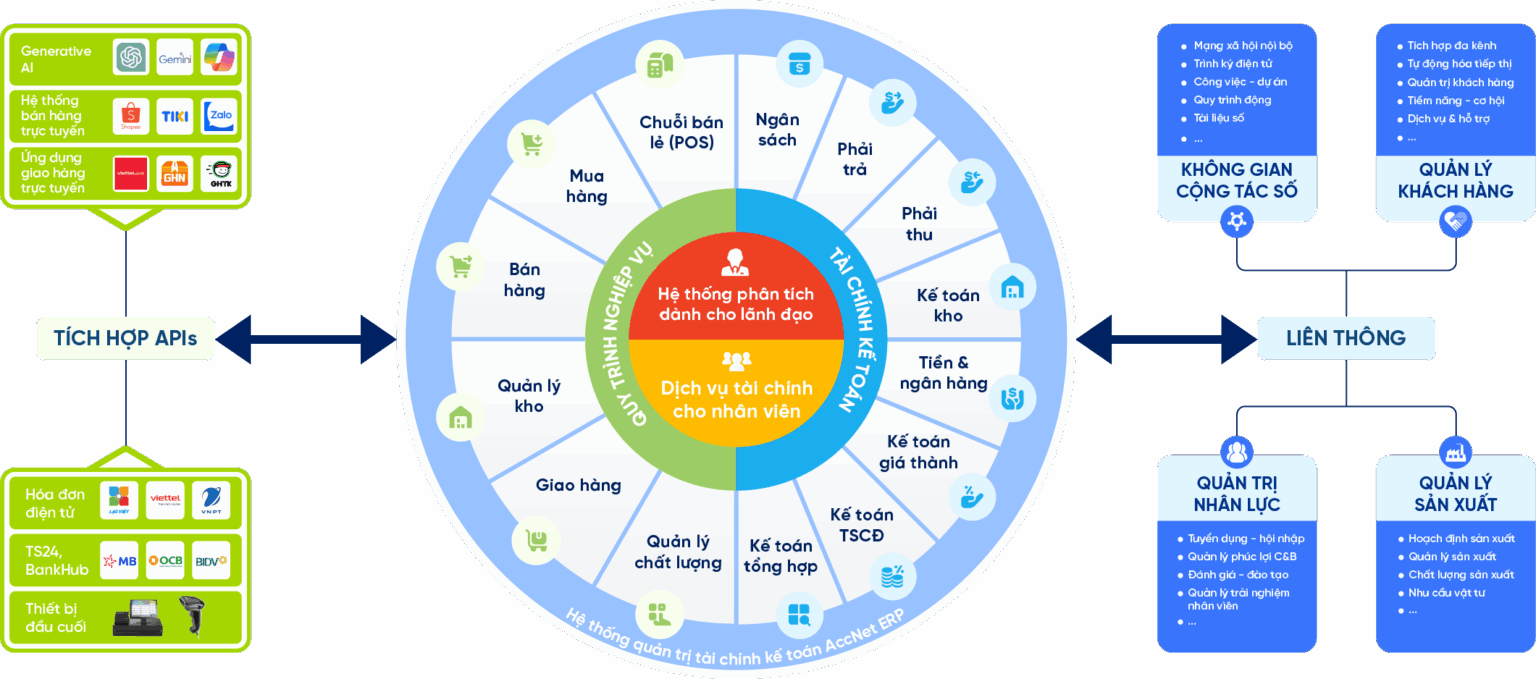
AccNet ERP is not merely accounting software serves the declaration and payment of tax, which is designed as a platform management accounting master. This solution supports business strictly control the revenue, cost, liabilities as well as cash flow on the same system. From which enhance financial transparency, the quality of governance decisions.
AccNet ERP helps businesses:
- Standardized accounting procedures revenue: revenue is recognized throughout from contracts, orders, invoices to receivables secured the right time, right quality according to standard accounting – tax rules, limiting the maximum errors manually.
- Transparency of financial data: accounting Data is the focus, continuity between the parts, which allows tracking as well as for projection of revenue, public debt, cash flow, real-time, enhance reliability of financial reporting.
- Risk control & capacity management: Systems support analysis of revenue by contract, customer, product, and time, help leadership identify early risks, liabilities, evaluate business performance and to adjust the strategy in a timely manner.
- Ready for transformation of financial & scaling: the process is digitized, automation helps businesses operate is flexible, easy to scale without increasing risk management or depends on the individual.
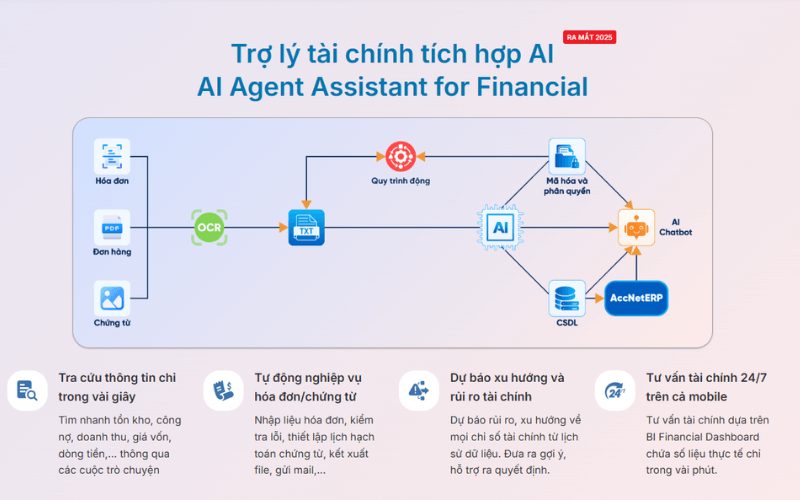
INTEGRATED AI ACCELERATION CONVERTER OF ACCOUNTING
AI in AccNet ERP't just stop at automate data entry, but also:
- Identification & classification certificate from smart: AI scan, read & sort invoice, voucher, receipt, limit errors due to input manually.
- Financial forecasting & budget: the system uses algorithms machine learning to forecast cost, revenue, business support decision fast.
- Warning risk accounting: AI to detect abnormalities in the book, from which timely warning of false or fraud risks.
- Reports assistant smart: AI suggested report template, automatic data aggregation support, leadership, financial analysis instant.
BUSINESS IS WHAT WHEN IMPLEMENTING ACCOUNTING SOFTWARE LAC VIET?
- Experience more than 30 years develop software solutions business management in Vietnam.
- Ecosystem of comprehensive: AccNet ERP easily connect with other solutions of Lac Viet (HRM, Workflow, Portal...).
- Advanced technology: Integrated AI support, cloud & on-premise flexible.
- Services dedicated support: A team of knowledgeable professionals with accounting – finance in Vietnam, companion throughout the deployment.
- Trust from thousands of customers in many areas: finance, banking, manufacturing, trade, services.
In summary, accounting, revenue is not only recorded data that is pillars reflect business performance capability financial management. Recorded true essence, the right time, as well as control the relationship between revenues – liabilities – cash flow help businesses reduce risk, increase transparency, enhance the reliability of financial reporting. So, the accountant should be held to standardize service management platform for business decisions accurately.