Phương pháp hạch toán hàng tồn kho là cách doanh nghiệp ghi nhận và theo dõi sự biến động của hàng tồn kho từ khi nhập kho đến khi xuất bán hoặc đưa vào sản xuất. Theo quy định hiện hành, doanh nghiệp được áp dụng hai phương pháp is kê khai thường xuyên and kiểm kê định kỳ, mỗi phương pháp có nguyên tắc ghi nhận, ưu điểm và phạm vi áp dụng khác nhau.
Việc lựa chọn đúng phương pháp không chỉ giúp doanh nghiệp tuân thủ Chuẩn mực kế toán Việt Nam số 02 (VAS 02) and Circular 99/2025/TT-BTC mà còn đảm bảo xác định chính xác giá vốn hàng bán, kiểm soát tồn kho hiệu quả và nâng cao độ tin cậy của báo cáo tài chính.
However, many new business or systematic warehouse complex, often have difficulty in choosing the method of accounting consistent, shipment tracking, valuation of stock as well as recorded fluctuations in inventory accuracy. Errors in accounting can lead to cost is calculated wrong, do affect the financial reporting and potential risk in the audit process.
The same Lac Viet learn in detail the method of accounting of inventory, how to calculate the price of stock, pros, cons, and selection criteria suitable to implement professional standards and efficiency.
1. Vì sao doanh nghiệp phải lựa chọn đúng phương pháp hạch toán hàng tồn kho?
Lựa chọn đúng phương pháp hạch toán hàng tồn kho không chỉ giúp tuân thủ quy định kế toán mà còn tác động trực tiếp đến chất lượng dữ liệu tài chính và hiệu quả quản trị doanh nghiệp. Mỗi phương pháp đều có ưu điểm riêng, phù hợp với từng quy mô, đặc điểm kinh doanh khác nhau. Nếu áp dụng không phù hợp, doanh nghiệp có thể phải đối mặt với nhiều hệ quả như số liệu tồn kho thiếu chính xác, chênh lệch giữa thực tế và sổ sách hoặc mất nhiều thời gian điều chỉnh khi kiểm toán.
- Trước hết, phương pháp hạch toán quyết định khả năng kiểm soát hàng tồn kho. Với doanh nghiệp có tần suất nhập – xuất lớn như bán lẻ, sản xuất hoặc phân phối, việc cập nhật số liệu liên tục giúp kế toán, nhà quản lý biết được lượng hàng còn lại theo thời gian thực, từ đó chủ động kế hoạch mua hàng, sản xuất, giao hàng.
- Besides, phương pháp hạch toán ảnh hưởng trực tiếp đến việc xác định giá vốn hàng bán và lợi nhuận của doanh nghiệp. Khi số liệu tồn kho được ghi nhận đầy đủ, báo cáo tài chính sẽ phản ánh chính xác hơn tình hình tài sản, chi phí, kết quả kinh doanh, đồng thời giảm rủi ro phát sinh sai lệch trong quá trình kiểm toán hoặc quyết toán thuế.
- Ngoài giá trị về mặt tuân thủ, việc lựa chọn phương pháp phù hợp còn mang lại lợi ích trong quản trị. Dữ liệu tồn kho chính xác giúp doanh nghiệp đánh giá tốc độ luân chuyển hàng hóa, nhận diện hàng tồn lâu ngày, tối ưu vốn lưu động, giảm chi phí lưu kho. Đây cũng là nền tảng để triển khai các hệ thống ERP hoặc phần mềm kế toán hiện đại, nơi dữ liệu kho được đồng bộ với mua hàng, bán hàng, tài chính nhằm hỗ trợ ra quyết định nhanh chóng chính xác hơn.
Theo Thông tư 99/2025/TT-BTC, doanh nghiệp phải lựa chọn phương pháp hạch toán và phương pháp xác định giá trị hàng tồn kho phù hợp với đặc điểm hoạt động, đồng thời áp dụng nhất quán giữa các kỳ kế toán. Việc thay đổi chỉ được thực hiện khi đáp ứng quy định về thay đổi chính sách kế toán, phải thuyết minh đầy đủ trên báo cáo tài chính.
2. Quy định hiện hành về hạch toán hàng tồn kho mới nhất
Việc hạch toán hàng tồn kho tại Việt Nam hiện nay được thực hiện dựa trên hai căn cứ pháp lý quan trọng là Chuẩn mực kế toán Việt Nam số 02 (VAS 02 – Hàng tồn kho) and Thông tư 99/2025/TT-BTC hướng dẫn chế độ kế toán doanh nghiệp (có hiệu lực từ ngày 01/01/2026). Trong đó, VAS 02 quy định các nguyên tắc ghi nhận, xác định giá trị, trình bày hàng tồn kho, còn Thông tư 99/2025/TT-BTC hướng dẫn chi tiết phương pháp hạch toán và cách vận dụng vào từng nghiệp vụ kế toán cụ thể.
2.1 Chuẩn mực kế toán Việt Nam số 02 quy định gì?
Chuẩn mực kế toán Việt Nam số 02 (VAS 02) là văn bản quy định các nguyên tắc cơ bản về ghi nhận, xác định giá trị, trình bày hàng tồn kho trên báo cáo tài chính. Mặc dù được ban hành từ năm 2001, đây vẫn là chuẩn mực nền tảng được Thông tư 99/2025/TT-BTC kế thừa và hướng dẫn áp dụng trong thực tế.
Nguyên tắc đầu tiên là ghi nhận hàng tồn kho theo giá gốc. Giá gốc bao gồm toàn bộ các khoản chi phí doanh nghiệp phải bỏ ra để đưa hàng tồn kho đến địa điểm, trạng thái hiện tại, như giá mua, chi phí vận chuyển, bốc dỡ, bảo hiểm và các chi phí liên quan trực tiếp khác. Ví dụ, khi doanh nghiệp nhập một lô nguyên vật liệu, chi phí vận chuyển từ nhà cung cấp đến kho cũng được tính vào giá gốc thay vì ghi nhận ngay vào chi phí bán hàng hoặc chi phí quản lý.
Bên cạnh giá gốc, VAS 02 yêu cầu doanh nghiệp đánh giá lại hàng tồn kho theo giá trị thuần có thể thực hiện được khi giá trị này thấp hơn giá gốc. Giá trị thuần có thể thực hiện được là giá bán ước tính của hàng tồn kho sau khi trừ đi các chi phí cần thiết để hoàn thiện và tiêu thụ sản phẩm. Quy định này giúp báo cáo tài chính phản ánh sát hơn giá trị thực tế của tài sản, đặc biệt đối với hàng hóa lỗi thời, chậm luân chuyển hoặc giảm giá mạnh trên thị trường.
Một nguyên tắc quan trọng khác là tính nhất quán. Doanh nghiệp phải áp dụng thống nhất phương pháp hạch toán hàng tồn kho và phương pháp tính giá xuất kho giữa các kỳ kế toán để đảm bảo số liệu có thể so sánh. Việc thay đổi phương pháp chỉ được thực hiện khi có lý do hợp lý, phải được thuyết minh đầy đủ trên báo cáo tài chính theo quy định hiện hành.
Ngoài ra, chuẩn mực cũng quy định chi phí liên quan đến hàng tồn kho chỉ được ghi nhận vào chi phí trong kỳ khi hàng tồn kho được tiêu thụ hoặc không còn mang lại lợi ích kinh tế. Điều này đồng nghĩa với việc chi phí mua hàng chưa được xuất bán sẽ được ghi nhận là tài sản trên bảng cân đối kế toán thay vì ghi nhận ngay vào chi phí, qua đó phản ánh chính xác hơn kết quả hoạt động kinh doanh của từng kỳ.
2.2 Quy định trong Thông tư 99/2025/TT-BTC
Circular 99/2025/TT-BTC là văn bản hướng dẫn chế độ kế toán doanh nghiệp đang được áp dụng từ ngày 01/01/2026. Đối với hàng tồn kho, thông tư quy định cụ thể nguyên tắc kế toán, hệ thống tài khoản, phương pháp ghi nhận và cách xử lý các nghiệp vụ phát sinh, giúp doanh nghiệp triển khai thống nhất trong thực tế.
Theo thông tư, nhóm tài khoản hàng tồn kho được sử dụng để phản ánh đầy đủ giá trị hiện có và tình hình biến động của nguyên vật liệu, công cụ dụng cụ, sản phẩm dở dang, thành phẩm, hàng hóa, hàng gửi đi bán, hàng mua đang đi đường. Những tài sản doanh nghiệp chỉ nhận giữ hộ, nhận gia công hoặc nhận ký gửi nhưng không thuộc quyền sở hữu sẽ không được ghi nhận là hàng tồn kho mà phải theo dõi riêng trên sổ chi tiết.
Thông tư cũng cho phép doanh nghiệp lựa chọn phương pháp kê khai thường xuyên hoặc phương pháp kiểm kê định kỳ để hạch toán hàng tồn kho, tùy theo quy mô và đặc điểm hoạt động. Tuy nhiên, sau khi lựa chọn, doanh nghiệp phải áp dụng nhất quán nhằm đảm bảo tính liên tục của dữ liệu kế toán, khả năng so sánh giữa các kỳ báo cáo.
For phương pháp tính giá xuất kho, doanh nghiệp được áp dụng các phương pháp theo quy định như bình quân gia quyền, nhập trước – xuất trước (FIFO) hoặc phương pháp đích danh đối với từng nhóm hàng hóa phù hợp. Việc lựa chọn phương pháp cần phản ánh trung thực đặc điểm luân chuyển của hàng tồn kho và phải được áp dụng nhất quán trong suốt niên độ kế toán.
Một điểm đáng chú ý là Thông tư 99/2025/TT-BTC tiếp tục yêu cầu doanh nghiệp lập dự phòng giảm giá hàng tồn kho khi giá trị thuần có thể thực hiện được thấp hơn giá gốc. Quy định này giúp doanh nghiệp chủ động phản ánh các rủi ro về giảm giá hàng hóa, tránh ghi nhận giá trị tài sản cao hơn thực tế, nâng cao độ tin cậy của báo cáo tài chính. Đồng thời, việc kiểm kê định kỳ, đối chiếu số liệu giữa sổ sách và thực tế cũng được xem là yêu cầu quan trọng nhằm phát hiện kịp thời hàng hóa hư hỏng, mất mát hoặc chênh lệch tồn kho để có biện pháp xử lý phù hợp.
3. Phương pháp hạch toán hàng tồn kho theo Thông tư 99/2025

3.1. Phương pháp kiểm kê thường xuyên
Method of accounting inventory declaration is frequently a form of accounting in which all fluctuations of inventory are recorded when incurred transaction import, export, or adjustment. The number and value of inventory is constantly updated, reflecting the real state of the repository at any time.
Formula:
- Inventory, end of period = inventory the beginning of the period + warehouse Import – Export warehouse
- The price of capital goods inventory = Number × unit value calculated by the method warehouse export selected (FIFO, LIFO, weighted Average or the destination list)
Way of accounting for inventory under the 200/133:
- Enter the repository:
- Debt TK 152, 156, 155 (Raw materials, goods and Finished products)
- Have TK 111, 112, 331 (Cash, Bank, pay the seller)
- Values recorded include the purchase price, shipping costs, and costs directly related.
- Stock:
- Debt TK 632 (cost of goods sold) or TK 154 (production Costs unfinished business)
- Have TK 152, 156, 155 (Reduce inventory by number – price already selected)
- Adjust inventory:
- Acknowledging the loss, damaged goods, returned goods, stock transfer: Debt TK 138 or TK 811 / Có TK 152, 155, 156
- Continuous reporting System: general accounting data in real time, providing reports, inventory, cost of sales and management reports.
Pros and cons:
| Criteria | Advantages | Cons |
| Accurate data | Inventory & value is constantly updated | Need modern software, high investment costs |
| Internal control | Minimize losses, errors in the import – export warehouse | Personnel must have the skills to operate & control closely |
| Report | Report inventory and price capital immediately, transparent | Complex when the warehouse has a variety of goods & multiple locations |
| Database Mgnt. | Decision support production, timely business | Need maintenance and software updates regularly |
Illustrative examples: Business enter 3 batches of goods:
- Lot 1: 100 product price 50.000
- Lot 2: 200 product price 55.000
- Lot 3: 150 product price 60.000
In January, the business made:
- Export warehouse 180 products for sale
- Internal stock transfer 20 products
- Goods damaged must get: 5 products
Accounting according to the inventory regularly:
- When entering 3 shipment:
- Record increase 152/156 according to each input, each time recording the correct value plots.
- After 180 products:
- The price of capital is system now according to the FIFO, or other method of business to choose.
- Set up a write-down of inventory in the right plot, the price of capital.
- When shipping 20 products between warehouses:
- Accounting internal: discount warehouse A – rise warehouse B, but does not change the total inventory.
- When cancelling 5 products:
- Record inventory reduction 152/156
- At the same time noted the cancellation costs: Debt 811 – Have 152/156
- End date/period:
- The system always know the inventory accurate for updates in real time.
3.2. Methods of inventory periodically
Method of accounting for inventory under the inventory periodically is the recognition that data inventory is determined only at the end of the accounting period based on the results of actual inventory. In the states, the import – export track only temporary and do not change right balance of inventory on the ledger.
Formula:
- Cost of goods sold = inventory the beginning of the period + Enter stock in the period – inventory end of period
- Inventory, end of period = value actual inventory at our warehouse
Way of accounting for inventory under the 200/133:
- Track provisional: Recorded vote, import – export warehouse under the form of diary or window, does not affect the balance of inventory official.
- Inventory end of period: specify the number of values inventory at the warehouse.
- Calculate cost of goods sold: Based on number of warehouses in the usa and inventory end of period, recorded the price of capital:
- Debt TK 632 (cost of goods sold) or TK 154 (production Costs unfinished business)
- Have TK 152, 155, 156 (Reduce inventory end of period)
- Adjustment data: make adjustments, inventory, provision for diminution in value, if necessary.
Pros and cons:
| Criteria | Advantages | Cons |
| Implementing | Easy to make, low system requirements and technology | Data inventory is not updated continuously |
| Cost | Management costs, low operating | Price of capital and the financial statements reflect slow |
| Fit | Small business stock is less volatile | Difficult to control losses promptly, to develop deviations |
| Report | Inventory last states to provide data synthesis | 't support timely decision-making in the states |
Illustrative example: the Enterprise are:
- Survive the beginning of the period: 300 product price 40.000
- In states import more:
- 100 products price 45.000
- 200 product price 48.000
- In stock: 420 products (only track votes)
- Final actual inventory: 150 products
Accounting according to the inventory periodically:
- In states:
- Recorded vote input, vote casting, the form window (not recorded in 152/156).
- Not determine the price of capital in the period.
- End:
- Actual inventory define inventory actual = 150 products
- Survive the end of the period = 150 × value calculated according to the method of calculating the price of stock selected.
- Calculate the price of capital:
Cost of goods sold = Inventory the beginning of the period + Total income in the states – Survive the end of a. - Recorded the price of capital:
- Debt 632
- There 152/155/156
- If there are any discrepancies shortage/excess:
- Accounting as prescribed: Debt 138/811 or Have 338/711
4. Cách lựa chọn phương pháp hạch toán hàng tồn kho phù hợp
Theo Thông tư 99/2025/TT-BTC, doanh nghiệp được lựa chọn phương pháp kê khai thường xuyên hoặc phương pháp kiểm kê định kỳ để hạch toán hàng tồn kho, nhưng phải áp dụng nhất quán trong suốt niên độ kế toán nhằm đảm bảo tính so sánh và trung thực của thông tin tài chính.
Thực tế cho thấy không có phương pháp nào là tối ưu cho mọi doanh nghiệp. Việc lựa chọn cần dựa trên quy mô hoạt động, đặc điểm ngành nghề, số lượng hàng hóa, tần suất nhập xuất và mục tiêu quản trị.
4.1 Quy mô doanh nghiệp
Quy mô doanh nghiệp là tiêu chí đầu tiên cần xem xét.
- Đối với doanh nghiệp nhỏ, số lượng chứng từ, giao dịch nhập xuất không nhiều, việc áp dụng kiểm kê định kỳ có thể giúp giảm khối lượng công việc hàng ngày. Kế toán chỉ cần xác định giá trị hàng tồn kho thông qua kiểm kê thực tế vào cuối kỳ để tính giá vốn hàng bán.
- Ngược lại, các doanh nghiệp vừa và lớn thường sở hữu nhiều kho hàng, nhiều chi nhánh hoặc phát sinh hàng trăm giao dịch mỗi ngày. Trong trường hợp này, kê khai thường xuyên sẽ mang lại lợi thế lớn vì mọi nghiệp vụ nhập – xuất, tồn kho đều được cập nhật ngay khi phát sinh. Nhờ đó, kế toán và ban lãnh đạo luôn nắm được số lượng cũng như giá trị hàng tồn kho theo thời gian thực, hạn chế tình trạng thiếu hàng hoặc tồn kho vượt mức.
4.2 Đặc điểm ngành nghề
Mỗi lĩnh vực kinh doanh có đặc điểm quản lý hàng tồn kho khác nhau nên phương pháp hạch toán cũng cần được lựa chọn phù hợp.
- Doanh nghiệp sản xuất thường phải quản lý đồng thời nguyên vật liệu, bán thành phẩm, thành phẩm, sản phẩm dở dang. Chỉ một sai lệch nhỏ trong số liệu tồn kho cũng có thể làm thay đổi giá thành sản phẩm và lợi nhuận của doanh nghiệp. Vì vậy, kê khai thường xuyên thường là lựa chọn phù hợp để theo dõi liên tục từng giai đoạn của quá trình sản xuất.
- Trong khi đó, doanh nghiệp thương mại, bán lẻ hoặc phân phối có tốc độ luân chuyển hàng hóa nhanh, số lượng giao dịch lớn. Việc cập nhật dữ liệu theo thời gian thực giúp hạn chế tình trạng bán vượt tồn kho, giao hàng chậm hoặc nhập hàng không kịp thời.
- Đối với những đơn vị kinh doanh quy mô nhỏ, ít chủng loại hàng hóa và ít phát sinh giao dịch, kiểm kê định kỳ vẫn có thể đáp ứng yêu cầu quản lý mà không làm tăng chi phí vận hành.
4.3 Tần suất nhập – xuất hàng hóa
Tần suất nhập xuất là yếu tố phản ánh rõ nhất mức độ phù hợp của từng phương pháp.
Nếu doanh nghiệp chỉ phát sinh vài giao dịch nhập hoặc xuất kho mỗi ngày, việc tổng hợp số liệu cuối kỳ sẽ không gây nhiều áp lực cho bộ phận kế toán. Tuy nhiên, khi số lượng giao dịch lên tới hàng trăm hoặc hàng nghìn mỗi ngày, việc chỉ kiểm kê cuối kỳ sẽ khiến doanh nghiệp khó phát hiện chênh lệch giữa số liệu trên sổ sách và thực tế.
Trong trường hợp này, kê khai thường xuyên giúp dữ liệu được cập nhật ngay sau mỗi nghiệp vụ phát sinh. Nếu xảy ra sai lệch hoặc thất thoát hàng hóa, kế toán có thể nhanh chóng truy vết nguyên nhân, xử lý kịp thời thay vì chờ đến cuối tháng hoặc cuối quý.
4.4 Số lượng SKU cần quản lý
SKU (Stock Keeping Unit) là mã quản lý riêng của từng mặt hàng hoặc từng biến thể sản phẩm. Số lượng SKU càng lớn thì việc quản lý tồn kho càng trở nên phức tạp.
- Chẳng hạn, một doanh nghiệp kinh doanh thời trang có thể sở hữu hàng nghìn SKU khác nhau theo màu sắc, kích cỡ, mẫu mã. Nếu áp dụng kiểm kê định kỳ, việc đối chiếu giữa thực tế và sổ sách sẽ mất nhiều thời gian, đồng thời làm tăng nguy cơ sai sót.
- Ngược lại, doanh nghiệp chỉ kinh doanh vài chục mặt hàng với mức biến động thấp có thể lựa chọn phương pháp đơn giản hơn mà vẫn đảm bảo hiệu quả quản lý.
4.5 Khả năng ứng dụng phần mềm kế toán
Hiện nay, chuyển đổi số đang làm thay đổi cách doanh nghiệp quản lý hàng tồn kho. Thông tư 99/2025/TT-BTC cũng được ban hành nhằm hoàn thiện khung pháp lý, đáp ứng yêu cầu đổi mới quản trị tài chính kế toán trong bối cảnh số hóa.
- Nếu trước đây kê khai thường xuyên đòi hỏi kế toán phải ghi chép thủ công với khối lượng lớn thì hiện nay phần lớn công việc đã được tự động hóa nhờ phần mềm kế toán hoặc hệ thống ERP. Khi phát sinh phiếu nhập, phiếu xuất hoặc hóa đơn bán hàng, hệ thống sẽ tự động cập nhật số lượng tồn kho, tính giá xuất kho, sinh bút toán, đồng bộ dữ liệu với các phân hệ mua hàng, bán hàng và tài chính.
- Ngược lại, doanh nghiệp vẫn quản lý bằng Excel sẽ dễ gặp tình trạng sai công thức, trùng dữ liệu hoặc khó đối chiếu khi số lượng giao dịch tăng lên. Đây là thời điểm nên cân nhắc chuyển sang phần mềm kế toán để nâng cao độ chính xác, giảm rủi ro trong công tác hạch toán.
4.6 Yêu cầu quản trị của doanh nghiệp
Ngoài mục tiêu tuân thủ quy định kế toán, doanh nghiệp cần cân nhắc yêu cầu quản trị nội bộ khi lựa chọn phương pháp hạch toán hàng tồn kho.
- Nếu ban lãnh đạo thường xuyên theo dõi doanh thu, giá vốn, tồn kho và hiệu quả kinh doanh để đưa ra quyết định nhanh, kê khai thường xuyên sẽ mang lại nhiều lợi ích hơn. Dữ liệu được cập nhật liên tục giúp doanh nghiệp đánh giá tốc độ luân chuyển hàng hóa, phát hiện hàng tồn lâu ngày, tối ưu kế hoạch mua hàng, giảm lượng vốn bị tồn đọng trong kho.
- Trong khi đó, những doanh nghiệp quy mô nhỏ với nhu cầu quản trị đơn giản và ít phát sinh giao dịch có thể áp dụng kiểm kê định kỳ để tiết kiệm nguồn lực mà vẫn đáp ứng đầy đủ yêu cầu của chế độ kế toán.
4.7 Sơ đồ lựa chọn phương pháp hạch toán hàng tồn kho
Để lựa chọn nhanh phương pháp phù hợp, doanh nghiệp có thể tham khảo nguyên tắc sau:
- Doanh nghiệp có nhiều giao dịch nhập – xuất, nhiều kho hàng, nhiều SKU, cần theo dõi tồn kho theo thời gian thực → Nên áp dụng phương pháp kê khai thường xuyên.
- Doanh nghiệp quy mô nhỏ, ít giao dịch, ít chủng loại hàng hóa và chủ yếu lập báo cáo định kỳ → Có thể áp dụng phương pháp kiểm kê định kỳ.
Quan trọng hơn cả, sau khi đã lựa chọn phương pháp hạch toán hàng tồn kho, doanh nghiệp cần áp dụng nhất quán giữa các kỳ kế toán. Điều này không chỉ đáp ứng quy định của Thông tư 99/2025/TT-BTC mà còn giúp báo cáo tài chính có tính so sánh cao, hỗ trợ kiểm toán và cung cấp dữ liệu đáng tin cậy cho các quyết định quản trị.
5. Xem thêm về các phương pháp tính giá xuất kho hàng tồn
The method of calculating the price of stock is the base to determine the price of goods sold and the inventory value in the states. The selection of suitable methods directly affect the profitability, financial reporting and tax obligations of the business. Currently, the common methods include FIFO, LIFO, weighted average price and purpose of the.

5.1. Methods first-ago (FIFO)
FIFO method based on the assumption that goods enter the warehouse will be prerendered. So, the price of the capital stock is calculated according to the price of the shipment to enter the first, also inventory end of period carrying value of the shipment enter after the same (close to the market price over).
Formula (special according to FIFO method)
- The price of the capital stock = (the Number of production batches enter first × Unit price lot 1) + (remaining quantity × Unit price of the next batch...)
- Inventory last states: includes top quality of the lot entered last.
Pros and cons:
| Criteria | Advantages | Cons |
| The price of capital & profits | The price of capital is lower when price increases → high profit | Price high capital when the price drops → reduced profitability |
| Inventory | Inventory reflected close to the market price, as well as the price of admission latest | Can increase the value of property in any price rise |
| Financial statements | Easy to apply, transparent | Can make high profits → increase the CIT |
| Database Mgnt. | Matching goods revving naturally | Not properly reflect the flow physics with a number of industry |
Illustrative examples:
- Enter 100 products price 50.000
- Enter 100 products price 60.000
- 150 products
Calculate the price of capital FIFO: 100 × 50.000 + 50 × 60.000
Inventory, end of period = 50 products price 60.000
5.2. Method enter the following export ago (LIFO)
Method LIFO assumes that the shipment entered last will be first. The price of the capital stock is calculated according to the price of the lot entered latest inventory while also bring the price of the lot older.
Formula:
- The price of the capital stock = (Number taken from plots import lastly × unit price latest) + (rest taken from previous batch)
- Inventory last states: Includes goods of the lot entered earlier.
Pros and cons:
| Criteria | Advantages | Cons |
| The price of capital & profits | Price high capital when the price increase → decrease in CIT | Low profit → reduce the possibility of attractive financial |
| Inventory | Inventory carrying old price → value in property, low | The inventory does not reflect actual price current |
| Financial statements | Suitable when businesses want to reduce taxable profits | Don't be IFRS accepted |
| Database Mgnt. | Useful when raw material prices, increased volatility fast | 't reflect the flow of physical goods |
Illustrative examples:
- Enter 100 products price 50.000
- Enter 100 products price 60.000
- 150 products
Cost of LIFO:
100 × 60.000 + 50 × 50.000
Inventory, end of period = 50 products price 50.000
5.3. Method weighted average
Method weighted average valuation of stock based on the average value of inventory. Every time a stock, the price of capital is calculated according to the unit price average, which is determined according to the period (periodic) or enter after each (continuous).
Recipe
- Weighted average for the period (periodic):
Unit price average = (Total value of inventory the beginning of the period + Total value of income in the period) / (Total number of inventories the beginning of the period + Total amount of income in the states)
- Weighted average continuous (declaration often):
Unit price average new = (value inventory before + value input) / (Number of inventories before + the Number of imported new)
Pros and cons:
| Criteria | Advantages | Cons |
| Calculate the price of capital | Simple, easy, stable | Not properly reflect the fluctuations in price of each lot |
| Report | The price of capital & inventory less volatility | May cause deviations when price volatility |
| Fit | Apply for business many kinds of items, fluctuations often | Not suitable for high value items, easy to distinguish |
| Database Mgnt. | Convenient in system software | Don't follow the actual price each batch import |
Illustrative examples:
- Survive the beginning of the period: 100 product, price 40.000
- Extra income: 100 product, price 60.000
Unit price average = (100×40.000 + 100×60.000) / 200 = 50.000
If 150 products → the Price of capital = 150 × 50.000
5.4. Method specific price
Method specific price applied to the goods may identify the private value or peculiarities. The price of capital is determined in accordance to the purchase price of the products, the warehouse, not average, or in order to enter.
Formula:
The price of the capital stock = original Price of the products repository (according to code, serial number, batch number...)
Pros and cons:
| Criteria | Advantages | Cons |
| Accuracy | Reflect the true cost of each product | Waste management, request tracking system details |
| Report | Clear, transparent | Does not fit with the big volume |
| Fit | High value goods: car, computer, electronics, jewelry | Does not apply to orders, the number of more |
| Database Mgnt. | Support profit in each order | Need code of strict management |
Illustrative examples:
A showroom motorbike enter 3 car with 3 different prices. After sale 1 pcs, accounting grab the correct price of the capital of that car according to the number of frames – number of the machine, do not take the average or the FIFO.
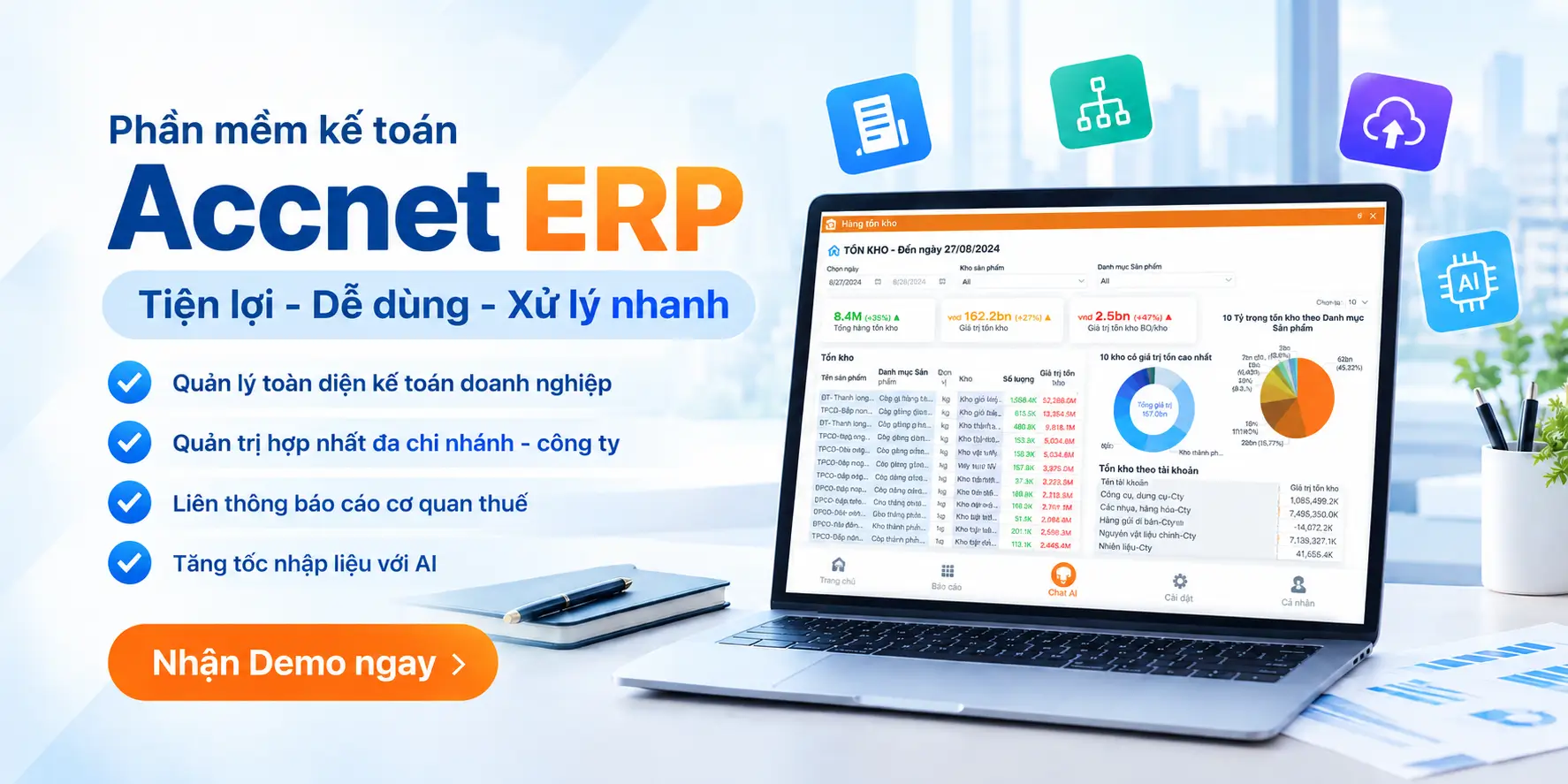
6. Giải pháp kế toán Accnet ERP tối ưu quy trình kế toán kho hiệu quả
To optimize the process of accounting for inventory and related costs, the business can apply accounting software Accnet ERP to help automate as well as transparent the whole process:
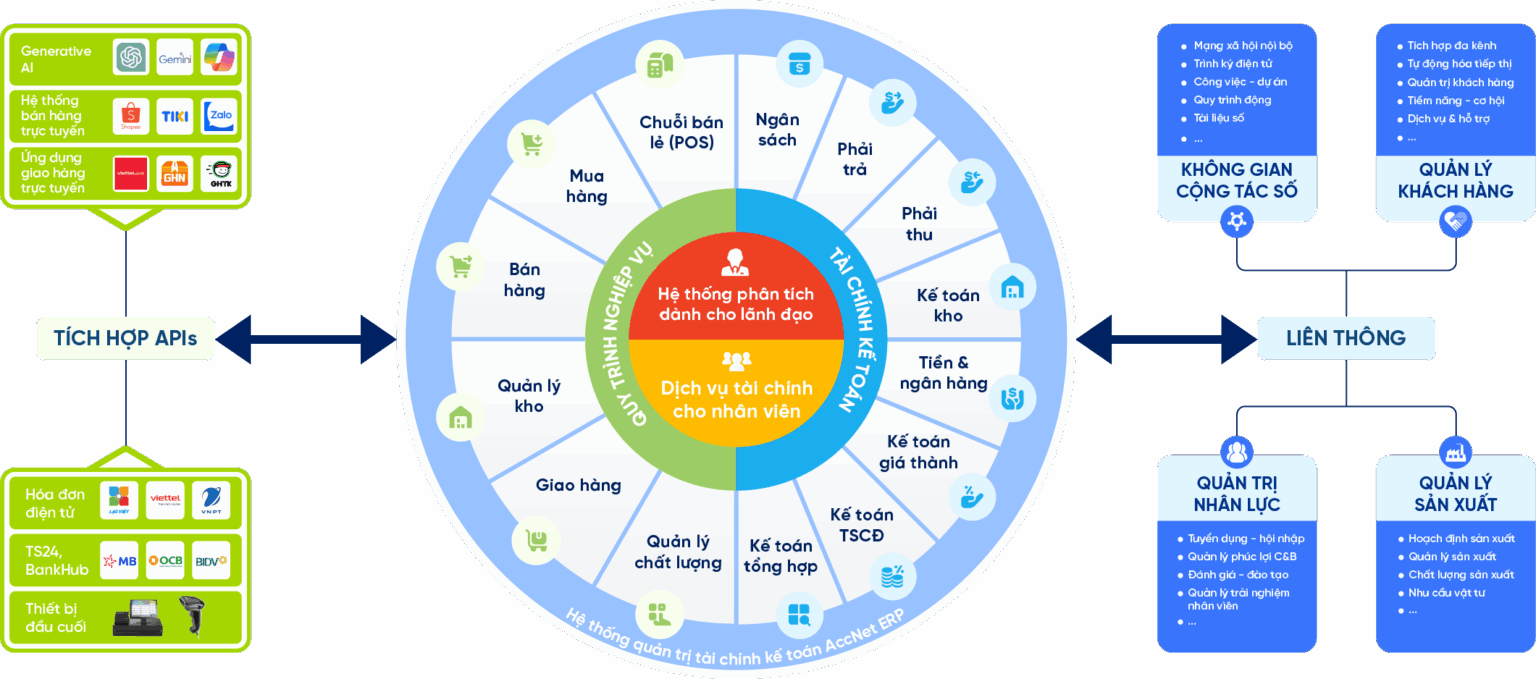
- Automatically accounted for by the KKTX or KKĐK: The software allows businesses to choose the method of accounting of inventory declare regular or inventory periodically, automatically records the pen payments arising under the correct method selected, reduce errors and crafts.
- Automatic calculation of price of stock to support the method of calculating the price of stock as popular as FIFO, weighted Average Price of destination the..., help to ensure the price of capital reflect the actual and optimal cost management.
- Data connection contact information: System closely linked between the parts inventory – purchases – sales – accounting, ensure data inventory as well as cost-sync, minimize deviations due to input manually.
- Track inventory in real time: Business can monitor the number of inventory realtime, get warnings when exceeding the maximum threshold or falls below the survival minimum, from which actively adjust purchases and manufacturing.
- Automatically set up accounting allocation & reserve: The software automatically set the accounting cost allocation, adjust the value of inventory, provision for diminution in value of inventory, help accountants save time as well as compliance standards VAS.
- Report inventory, multi-dimensional: Supply warehouse report details the multi-dimensional (code, plots, warehouse, time), support fast inventory as well as evaluate the effectiveness inventory management, increased transparency and accurate decisions.
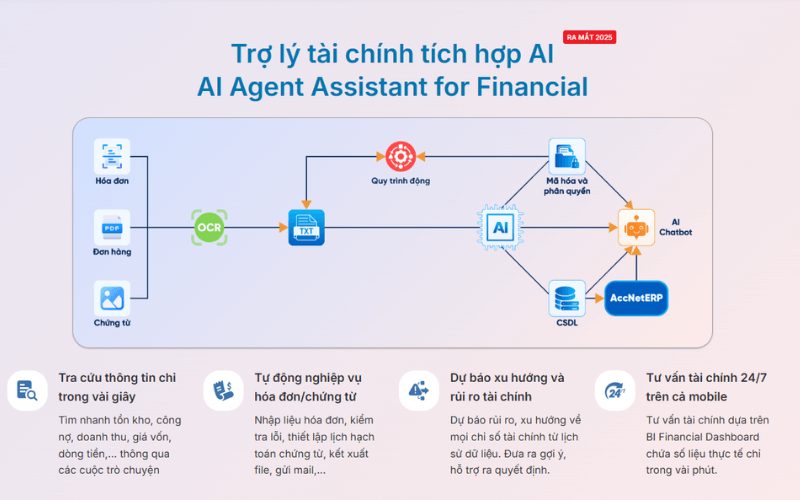
INTEGRATED AI ACCELERATION CONVERTER OF ACCOUNTING
AI in AccNet ERP't just stop at automate data entry, but also:
- Identification & classification certificate from smart: AI scan, read & sort invoice, voucher, receipt, limit errors due to input manually.
- Financial forecasting & budget: the system uses algorithms machine learning to forecast cost, revenue, business support decision fast.
- Warning risk accounting: AI to detect abnormalities in the book, from which timely warning of false or fraud risks.
- Reports assistant smart: AI suggested report template, automatic data aggregation support, leadership, financial analysis instant.
BUSINESS IS WHAT WHEN IMPLEMENTING ACCOUNTING SOFTWARE LAC VIET?
- Experience more than 30 years develop software solutions business management in Vietnam.
- Ecosystem of comprehensive: AccNet ERP easily connect with other solutions of Lac Viet (HRM, Workflow, Portal...).
- Advanced technology: Integrated AI support, cloud & on-premise flexible.
- Services dedicated support: A team of knowledgeable professionals with accounting – finance in Vietnam, companion throughout the deployment.
- Trust from thousands of customers in many areas: finance, banking, manufacturing, trade, services.
The application software Accnet ERP not only optimize the process of accounting for inventory, but also improve the efficiency of financial management overall, help business control costs, manage the public debt as well as cash flow in a transparent, accurate, and effective.
Method of accounting, inventory plays a key role in cost control, optimal price of capital and ensure the transparency of financial reporting. Choosing the right method to help reduce the risk of errors, losses and improve operational efficiency, internal. When is consistently implemented, compliance with accounting standards and associated tools compliance management, accounting, inventory become the platform to support business decisions accurately and enhance the competitiveness of the business.